
Organizations expecting to scale AI, must manage risk, and prove its value. Without visibility into content activity, access, search, and how AI is used in practice, AI leaders cannot see what works or where risk hides. This activity also gives AI critical signals about authority, trust, and expertise. Without them, every source can look equally reliable.
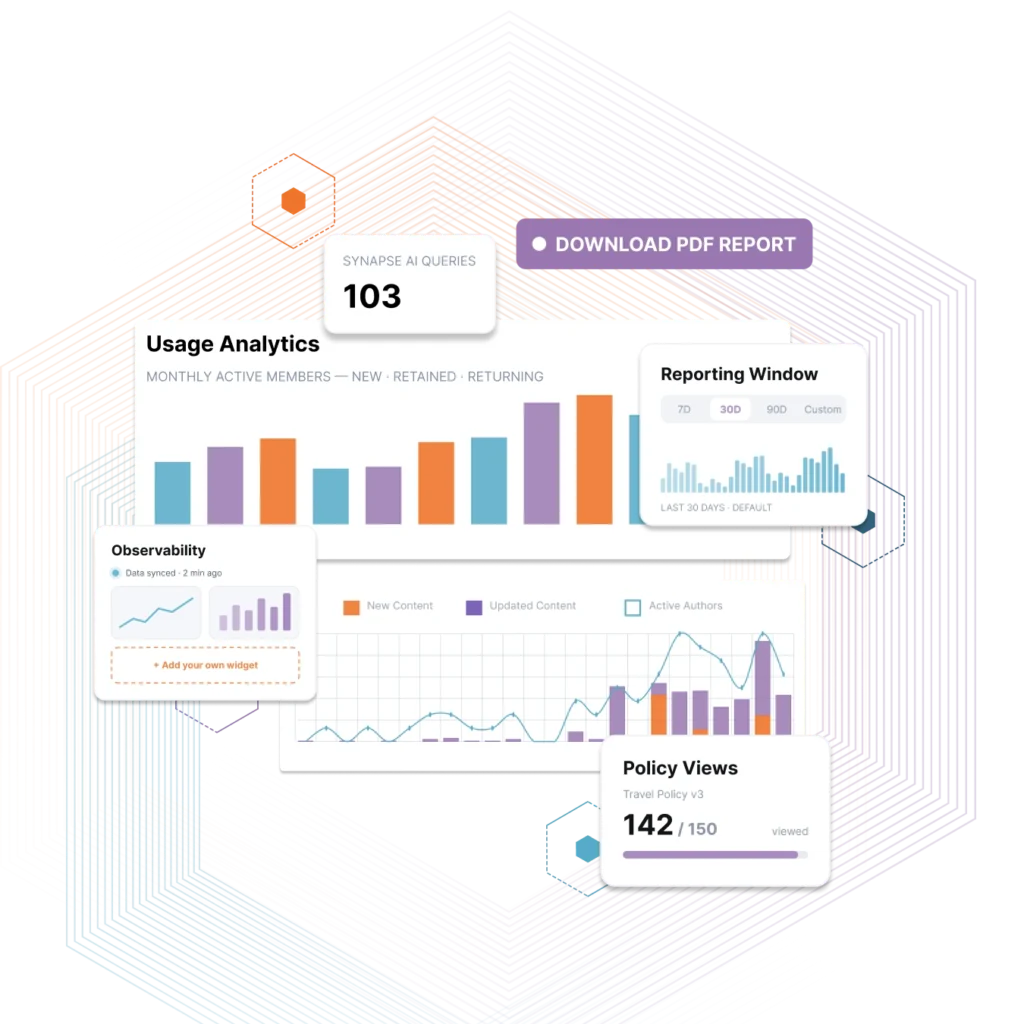
See How Work Really Gets Done
Usage Analytics
Org charts and process documents show how a company is supposed to work. Usage data shows how it actually works.
Every search, content view, update, and AI interaction reveals what employees need, which sources they trust, and where knowledge flows or breaks down. Without that visibility, IT teams miss hidden gaps, repeated work, adoption barriers, and the experts people rely on to keep the business moving.Get Started with Bloomfire
Get TechnicalLearn How Data Traces Inform Context
You Can’t Improve
What You Don’t Measure

Help AI Know What to Trust
Usage data shows how knowledge performs in real work. Searches, views, updates, and AI traces reveal which content people rely on, which sources stay current, and who holds key expertise. When systems do not capture this activity, AI loses valuable context.
The Enterprise Intelligence Engine turns usage data into signals of authority, trust, and expertise. These signals help AI give more weight to stronger sources and give teams a better foundation for AI governance.
See What People Rely On: Track searches, views, updates, and AI activity to understand which knowledge supports real work.
Identify Trusted Sources and Experts: Use behavior, ownership, freshness, and contribution patterns to reveal authoritative content and key expertise.
Govern AI With Evidence: Turn usage and AI traces into clear signals that help AI favor stronger sources and give teams a record of how information is used.
Where Usage Data
Becomes Insight

Knowledge Health
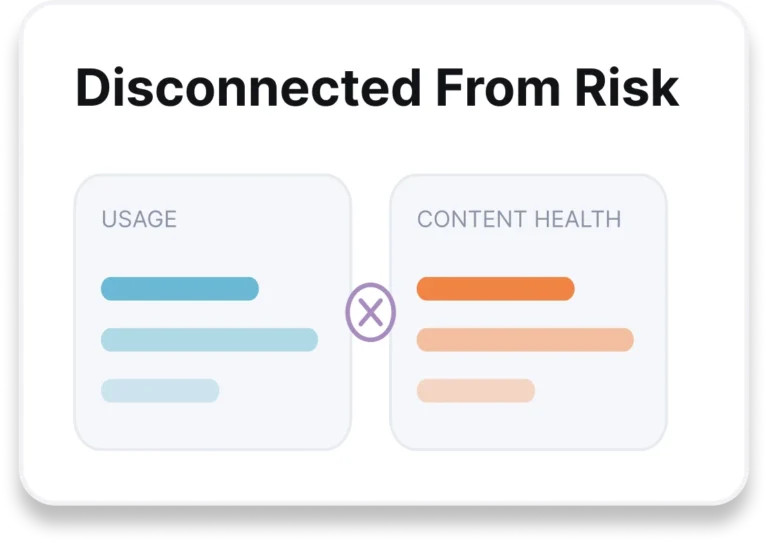
Usage data means more once it’s tied to the state of the content behind it. What’s overused, underused, or driving repeated conflicting answers shows up in one place.

Finding the Gaps
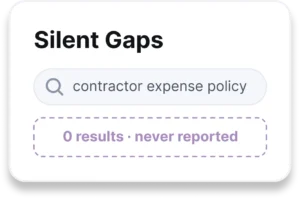
Some knowledge gaps get flagged. Most just show up as searches that go nowhere. Usage Analytics catches both and feeds them straight into Knowledge Base Health’s gap detection.

Full Audit Trail
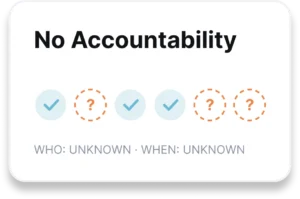
When someone asks who saw a policy and when, “we think everyone did” isn’t an answer. Every access, edit, and interaction gets logged with its source.

Customizable Reporting
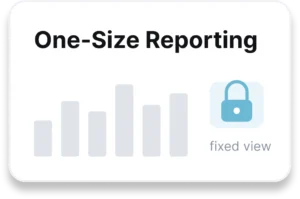
No two teams measure adoption the same way. Custom reports are built around what your organization actually cares about, not a fixed dashboard.
Together, these insights create a feedback loop between how people work, the health of your knowledge, and the performance of your AI. Teams can focus improvements where they matter most, reduce risk, and track whether those changes improve adoption and business results over time.
Go Beyond AI Monitoring
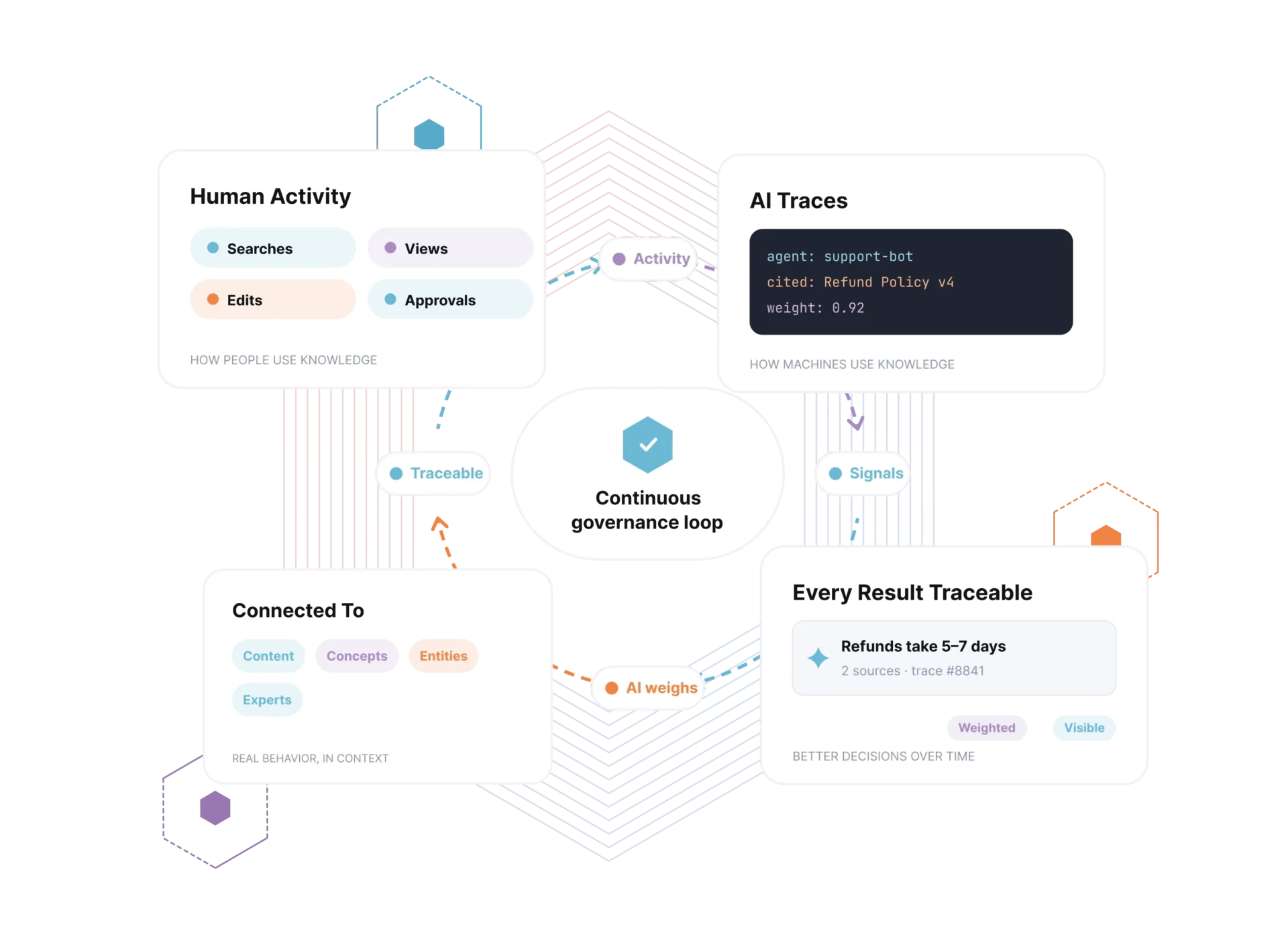
AI traces tell you how machines use knowledge. Searches, views, edits, approvals, and other human activity show how people use it. The Enterprise Intelligence Engine brings both together to improve what happens next.
It connects human and AI activity to specific content, concepts, entities, and experts, turning real behavior into signals of trust, authority, and expertise. These signals guide how AI weighs information, while every result remains visible and traceable. Each interaction strengthens a continuous governance loop that helps AI make better decisions over time.
Frequently Asked Questions
Four categories: popular queries (what people search and whether they find it), engagement and collaboration (comments, likes, shares, downloads), a full audit trail, and custom reports built around whatever your team wants to track. That combination of query reporting, engagement scoring, and audit trails is what puts Bloomfire in the insight engines category, not just basic analytics.
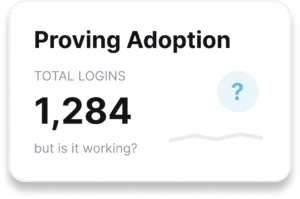
Query volume and click-through show what people are searching for and whether they found it. Engagement scoring adds a second layer, tracking comments, likes, shares, and downloads, so adoption shows up as more than a login count.
In two ways. Escalated questions surface what people had to ask a person instead of finding it on their own. Discovered gaps are flagged automatically from repeated searches with high abandonment or Synapse questions that went unanswered, then sorted into a discovery gap, a content gap, or a training gap depending on what’s missing.
Who accessed a piece of content, when, what action they took, and which surface they came from, whether that’s the Bloomfire app, Teams, Salesforce, or the browser extension. It’s a record of actions, not just page views.
You can export any report to CSV, and the API can feed usage data directly into your BI stack for teams that want it alongside other operational data, rather than in a separate dashboard.
Usage feeds directly into health scoring. Content that many people rely on but that’s stale or unresolved gets flagged as knowledge at risk, and a single document that too many people depend on gets flagged for concentration risk, so adoption and content risk show up in one place instead of two separate reports.

Build your knowledge ecosystem
Connect knowledge pools of documents, conversations, media, data, and expertise with your Persistent Semantic Memory™ to ground your AI. Use our turn-key of connectors or build your own to connect to any enterprise systems.

Sign up for Innovation
The pace of innovation with AI is accelerating. Join an alpha group for early access to new turnkey Intelligence Modules, and help shape what comes next.