
The Evolution of Enterprise Search: From Keywords to Conversational AI

Betsy leads the customer success and implementation teams at Bloomfire and is a Certified Knowledge Manager (CKM) from KM Institute. Passionate about the people side of knowledge engagement and knowledge sharing, she brings real-world experience in tackling the challenges companies face with knowledge management.

Summary: Enterprise search evolved from rigid keyword matching into AI-powered systems using NLP, semantic understanding, and LLMs to interpret intent and deliver conversational, synthesized answers.
Enterprise search addresses the critical productivity drain of spending hours searching for information and transforms how organizations access and use knowledge. Traditional keyword-based systems struggled with data silos and limited contextual understanding. Workers had to waste nearly a quarter of their workweek on inefficient searches.
Today’s artificial intelligence (AI)-powered enterprise search uses natural language processing (NLP) and semantic understanding to interpret user intent with precision. Generative AI in enterprise search takes this further. It enables conversational AI search that doesn’t just retrieve documents but combines answers and creates insights. Below, we explore enterprise search technology’s trip from simple keyword matching to intelligent, context-aware systems that are reshaping workplace productivity and decision-making.
The Early Days of Enterprise Search Technology
The commercial rise of enterprise search technology began in 1970 with IBM’s launch of STAIRS (Storage and Information Retrieval System). Keyword-based systems delivered what they were designed to deliver: lists. Enter a term, get documents ranked by how many times that term appeared. This approach worked well enough for structured databases and predictable queries.
The limitations became apparent as organizations grew more complex. Keyword search operated on rigid logic and matched exact terms without understanding meaning or context. A search for “customer outage” would miss tickets labeled “downtime issue” or “service disruption“. The system couldn’t handle synonyms, misspellings, or word variants. Irrelevant data surfaced in search queries because of shared keywords, all out of context.
A 1985 evaluation of IBM’s STAIRS system raised serious doubts about full-text indexing effectiveness. The assessment concluded that the system didn’t work well in its tested environment. Theoretical reasons suggested full-text retrieval systems applied to large databases were unlikely to perform well in any retrieval environment.
The data silo challenge
Enterprise knowledge lived in formats that keyword systems were never built to handle: email threads, support tickets, internal wikis, code repositories, policy documents, and chat channels. Research shows 80% of enterprise data is unstructured. Organizations struggled with disconnected data sources, and 87% faced inefficiencies in operations and decision-making.
Different teams collected, managed, and stored data separately, which meant access was limited to specific groups. Knowledge workers had to use at least four different systems to access relevant search results, according to Bain’s findings. Information scattered in apps, databases, and knowledge bases made unified search difficult.
Why traditional search fell short
Productivity dropped when employees couldn’t find what they needed. Workers spent time searching rather than doing. Decision quality degraded because information arrived late, incomplete, or not at all. Institutional knowledge became locked inside siloed systems that couldn’t communicate with each other.
The cost was measurable. Knowledge workers spent much of their week searching for information rather than acting on it. Poor search relevance led employees to lose trust in the system and forced them to ask colleagues directly or give up entirely.
The AI Revolution: From Keywords to Contextual Understanding
Enterprise search has long struggled with a basic mismatch. Employees think in questions and problems, but traditional systems only understand keywords. The result is frustrating searches, duplicated work, and information that stays buried even when it technically exists somewhere in the organization. Artificial intelligence is closing that gap.
Modern search platforms combine natural language processing, semantic AI search, and machine learning so they no longer just match text strings. Instead, they interpret meaning, infer intent, and continuously learn what relevant actually looks like for each user. The sections below break down the core elements driving this shift.
Natural language processing
Natural language processing makes systems interpret human language in a meaningful way rather than treat queries as text strings. NLP allows search to recognize intent, identify key concepts, and understand relationships between words. Employees ask questions and describe problems. They use abbreviations and rely on department-specific terminology instead of thinking in keywords.
NLP techniques break down this complexity. Tokenization splits text into meaningful units for analysis that is efficient. Named entity recognition identifies people, teams, projects, dates, and locations. Semantic models connect related concepts and synonyms so results go beyond exact keyword matches. Intent detection recognizes whether users seek information, instructions, or actions.
Semantic search and intent recognition
Contextual search optimizes results based on user context and computer environment. Traditional information or data retrieval returns document lists based on relevance. Contextual search increases precision based on individual value.
Semantic search employs vector databases and machine learning to comprehend query intent, language nuances, and information relationships. The system analyzes semantics to recognize synonyms, related concepts, and sentiment. Vector embeddings create numerical representations that capture semantic meaning. This allows comparison in multi-dimensional space where proximity indicates relevance.
Intent recognition classifies queries into informational, transactional, navigational, or consideration categories. Machine learning models learn to predict user intent for new queries after training on annotated datasets.
Machine learning and search relevance
AI-driven relevance tuning uses behavioral analytics and adaptive ranking algorithms to refine results dynamically. Systems analyze click-through rates, query patterns, user engagement metrics, and document relevance feedback. Learning-to-rank algorithms predict which documents should appear at the top. Models refine their accuracy continuously.
AI-powered enterprise search
AI-powered enterprise search represents a radical alteration from keyword matching to intelligent, context-aware information discovery. The fundamental difference lies in understanding versus matching. AI-improved search utilizes natural language processing to understand query intent. It thinks over context, user roles, and information relationships.
Generative AI in Enterprise Search: A New Era
Enterprise search has spent decades helping people find the right information quickly. What has changed is the technology capable of delivering on that goal. Generative AI, and large language models in particular, now let search systems read, reason about, and synthesize company knowledge rather than simply pointing users toward a stack of documents.
How large language models boost search
Large language models reshape enterprise search by moving beyond pattern matching to actual comprehension. LLMs boost language understanding and deliver highly relevant search results that significantly improve accuracy. Semantic search functionality comprehends deeper meaning and intent behind user queries. It delivers contextually relevant results. Natural language queries allow users to create searches conversationally rather than constructing keyword strings.
Multimodal search processes data of all kinds. It retrieves information from sources and formats of all types. LLMs understand complex documents and enable deep information retrieval. They extract valuable insights from extensive content. Personalized search tailors results to individual users based on priorities. These systems excel in knowledge discovery, uncovering relationships, patterns, and insights within large datasets.
Conversational AI search capabilities
Conversational AI search enables users to ask questions in natural language. They receive direct and accurate answers. The technology mimics human-like interaction and understands intent. It supports multi-step queries where users build on previous answers. Voice search processes spoken queries while accounting for accents and background noise. Image search allows users to find products or information by uploading photos.
Conversational search narrows queries and filters thousands of items down to relevant results. The system maintains conversation history throughout interactions and provides continuous context.
Turn Content Into Conversations
Synapse’s AI understands your knowledge base and answers like a teammate would.
Discover Synapse
From retrieval to reasoning and synthesis
Retrieval-augmented generation integrates retrieval systems with large language models. The RAG process retrieves relevant information from knowledge graphs. It then provides LLMs with context to generate intelligent and fact-based answers. This hybrid approach addresses limitations of both traditional search and general-purpose LLMs.
RAG prevents LLMs from generating false information. It grounds responses in verified company data. The system delivers direct and useful answers rather than document lists.
Live insights and answer generation
Answer synthesis uses LLMs to respond in natural language. It includes citations to retrieved sources. The platform combines information into clear and useful responses rather than returning links. Systems generate summaries and suggest actions based on findings, and live context-aware answers eliminate manual cross-referencing across documents or systems.
These capabilities mark a fundamental turning point in how organizations access their own knowledge. As enterprise data volumes continue to grow, this shift from keyword matching to contextual understanding will separate organizations that can find their information from those that simply store it
The Future of Enterprise Search: Intelligent Systems and Autonomous Agents
Enterprise AI search has already moved from simple keyword matching to systems that understand meaning and intent. The next stage of this evolution goes further, shifting search from a passive tool that waits for a query into an active participant in getting work done.
Autonomous agents, unified retrieval across internal and external sources, deep personalization, and stronger governance are converging to define what enterprise search looks like over the next several years. Learn more about these developments.
Agentic search and proactive knowledge discovery
Autonomous agents represent the next development, moving beyond conversational interfaces to systems that reason, plan, and complete tasks on behalf of humans. Gartner projects that agentic AI will make at least 15% of work decisions autonomously by 2028, compared to 0% in 2024. A third of enterprise applications will include agentic AI by that same year.
Agentic search combines autonomous agents with enterprise search and enables software to act and keep acting until a goal is achieved. The system detects gaps in content, finds duplicate or outdated articles, and predicts what knowledge will be needed next. Semantic clustering groups related content and identifies gaps in knowledge landscapes. It measures need and prioritizes based on search frequency, case volume, and business effect.
Unified search across internal and external sources
Unified search serves as the retrieval foundation for AI agents. An agent that can retrieve accurate, permission-aware context and then take action proves transformative. The pattern works in two stages. First, unified search finds relevant information across the stack using semantic matching and RAG. Then an agent acts on it, updating records, drafting replies, or completing multi-step tasks.
Modern platforms combine central indexing for speed with connector-based freshness and layer semantic search and RAG on top. Live search with agentic reasoning fetches data on the fly rather than indexing everything upfront. An AI reasoning model interprets queries and decides which sources to query and how. This brings intelligence to every search.
Personalization and context-aware results
Personalized search tailors results to each employee’s role, permissions, and context to deliver secure, relevant answers. Systems use contextual data, system integrations, and AI-driven algorithms to interpret queries and prioritize relevant content. Advanced systems employ powerful reasoning engines designed to understand goals and reference searches across business systems.
Context-aware AI search understands user intent and business relevance. It filters and refines results based on user intent deduced from past queries, user role and permissions, and business context. Immediate access control filters results based on each user’s permissions and system-level access. Organizations enforce permissions in real time and keep permissions synchronized.
Security, governance, and compliance in AI-powered workplace search
An enterprise search platform maintains certifications for global, regional, and industry-specific standards including ISO 27001, SOC 2, FedRAMP, HIPAA, and GDPR. Security architecture must evolve beyond model-era defenses to govern agent actions, detect drift, and secure multi-agent systems.
Autonomous agents execute workflows, invoke tools, access data sources, and chain operations across systems. Action-layer enforcement evaluates what an agent is about to do and applies policies based on the specific operation, data involved, agent permissions, and operational context.
AI governance defines how AI systems are built, deployed, and managed. It establishes who is accountable for what. Organizations must embed governance into the orchestration layer to enforce controls before execution occurs. Multi-agent security governance tracks request lineage across agent chains and evaluates cumulative risk across collaborative workflows.
The enterprise search market outlook
Cloud deployment continues to dominate because hyperscalers bundle managed indexing, pre-trained language models, and elastic scaling. This lowers total cost of ownership. The hosted search segment is expected to attain the highest CAGR of around 10% during the forecast period from 2023 to 2030. Conversational search grows at 11.43% CAGR, the fastest of any modality.
The global enterprise search market size was estimated at USD 4,867.2 million in 2023 and is projected to reach USD 8,851.7 million by 2030. It will grow at a CAGR of 8.9% from 2024 to 2030. Another projection places the market at USD 7.47 billion in 2026 and climbing to USD 11.66 billion by 2031, reflecting a 9.31% CAGR.
Large enterprises captured over 70% revenue share in 2022, driven by increasing need for tools that enable accurate data search in vast databases. The AI agents market itself is expected to grow to USD 52.60 billion by 2030, reflecting a compound annual growth rate of around 45%. Over 50% of organizations identify agentic AI as a priority area within generative AI development.
Riding the Tide of Enterprise Search Evolution
Enterprise search has changed from simple keyword matching to intelligent systems that understand intent and blend answers. Soon, these systems will act autonomously. The change toward agentic AI represents the next frontier. Search systems won’t just find information; they will proactively identify knowledge gaps and complete tasks. Organizations that adopt these intelligent search platforms now will gain the most important competitive advantages as autonomous agents reshape workplace efficiency.
Smarter Answers Start Here
Synapse uses AI to surface the right answer, right when your team needs it.
See Synapse in Action
Generative AI can synthesize information from multiple sources into a single, coherent answer instead of forcing users to sift through separate documents. This saves time and helps surface insights that might otherwise remain scattered across disconnected files.
AI-powered search can tailor results based on a user’s role, past behavior, and department, making answers more relevant to their specific needs. This reduces irrelevant results and helps employees find information faster.
AI-powered search must respect existing access permissions to ensure employees only see information they’re authorized to view. Additional challenges include preventing sensitive data leakage through generated summaries or answers that pull from restricted sources.
Betsy leads the customer success and implementation teams at Bloomfire and is a Certified Knowledge Manager (CKM) from KM Institute. Passionate about the people side of knowledge engagement and knowledge sharing, she brings real-world experience in tackling the challenges companies face with knowledge management.
How Self-Healing Knowledge Bases Work: A Closer Look Into Bloomfire’s Content Reliability

How Conflicting Content Detection Protects Answer Accuracy
Salesforce Einstein + Bloomfire: Smarter Answers Inside the CRM

Build your knowledge ecosystem
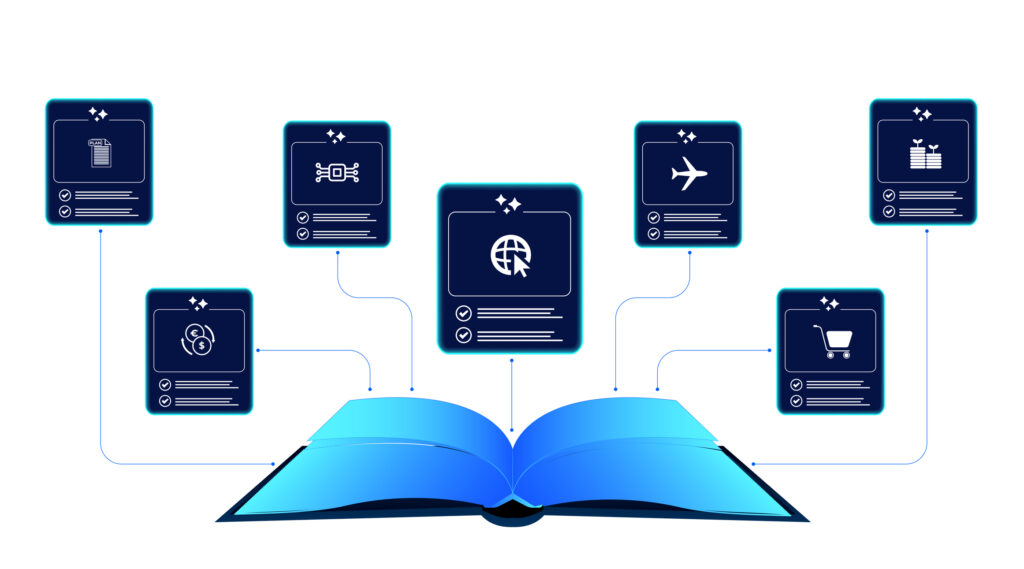
Connect knowledge pools of documents, conversations, media, data, and expertise with your Persistent Semantic Memory™ to ground your AI. Use our turn-key of connectors or build your own to connect to any enterprise systems.

Sign up for Innovation
The pace of innovation with AI is accelerating. Join an alpha group for early access to new turnkey Intelligence Modules, and help shape what comes next.