
How Self-Healing Knowledge Bases Work: A Closer Look Into Bloomfire’s Content Reliability

Sanjay Jain leads a visionary team responsible for developing our platform and advancing capabilities for digital knowledge workers. With a relentless commitment to innovation, Sanjay and his team empower organizations to scan, search, select, synthesize, socialize, and signify their knowledge with the transformative power of AI.
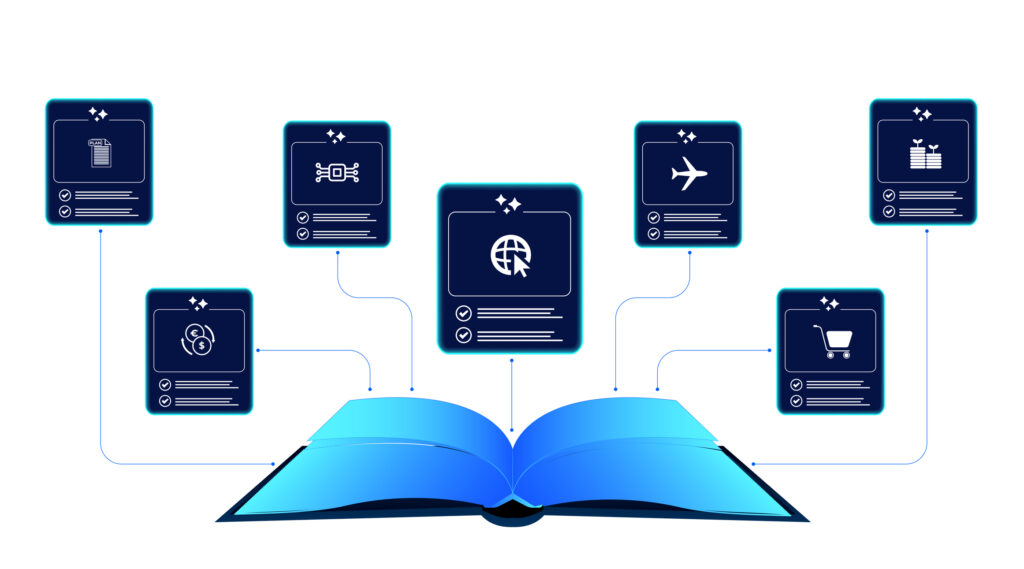
Summary: A self-healing knowledge base is a system that continuously finds and helps resolve its own quality problems, duplicate content, conflicting information, and decay, instead of relying on manual audits. Bloomfire’s Content Reliability engine does this by scanning every published and updated contribution, flagging likely duplicates and contradictions with a plain-language explanation, and routing each issue to the right content owner for review.
Knowledge bases do not stay clean on their own. Every new policy update, product launch, and support ticket adds to the pile, and somewhere in that pile, an old version of the truth still sits there, waiting to be found by the wrong person or the wrong artificial intelligence (AI) model. A self-healing knowledge base catches that problem before it spreads, using continuous automated checks instead of the quarterly content audit most teams have learned to dread.
This piece breaks down what a self-healing knowledge base actually is, and why the traditional approach to content quality cannot keep up with how fast organizations publish today. Plus, we’ll discuss how Bloomfire’s Content Reliability engine puts the concept into practice.
What Is a Self-Healing Knowledge Base?
A self-healing knowledge base is a system that continuously detects and helps resolve quality issues, duplicate content, decay, and conflicting information or data, rather than relying on someone to remember to run an audit. It is not a single feature so much as a capability built from two things working together: constant monitoring of every contribution as it is published or edited, and a guided workflow that puts fixes in front of the person best equipped to make them.
The idea sits directly underneath Bloomfire’s Enterprise Intelligence positioning. An AI system can only be as trustworthy as the knowledge it draws from, and a knowledge base that quietly accumulates duplicates and contradictions will hand that same mess straight to every chatbot, search tool, and generative AI feature built on top of it.
The Three Problems a Self-Healing Knowledge Base Solves
As content grows, nearly every organization runs into the same three challenges. Left unaddressed, they compound and get harder to untangle with each passing month.
- Duplicate content: Multiple contributions cover the same topic in slightly different ways. Nobody sets out to create clutter; it happens naturally as different teams document the same process, but the result is confusion about which version to trust and wasted effort maintaining both.
- Conflicting information: Two sources list different specs, different policy requirements, or different steps for the same task. This is more dangerous than duplication because it actively misleads whoever reads it, whether that is a new hire, a customer, or an AI model choosing which fact to surface.
- Content decay and AI accuracy: Redundant, outdated, or contradictory content does not just confuse employees; it feeds directly into AI enterprise search and generative tools. Retrieval systems pull from whatever is available without knowing whether it has been reviewed recently, so quality problems in the source material become quality problems in every AI-generated answer.
These issues create a heavy administrative burden for the people responsible for content, and they raise operational risk in the teams that can least afford it: customer support, compliance, and onboarding.
Why Manual Audits Cannot Keep Up
Most organizations still rely on periodic content audits, spreadsheet trackers, or a designated owner who checks in every quarter. That approach made sense when content grew slowly, but it does not hold up anymore.
Manual audits are reactive by design. Someone typically discovers a duplicate or a contradiction by accident, after it has already caused confusion. They are also resource-intensive, requiring a person or team to read through a large volume of content and compare it for overlaps and conflicts. The work scales linearly with the size of the knowledge base, while the time available does not. Most importantly, an audit is only accurate at the moment it is completed.
By definition, every piece of content published after that point is unaudited, which means the next review has to start the process over again from the beginning. Recent knowledge management research quantifies the cost of this gap. Employees spend close to two hours a day, and more than nine hours a week, searching for information rather than doing the work they were hired to do. A large share of that time is lost to exactly the kind of confusion duplicate and conflicting content creates: not knowing which version of an answer to trust.
How Bloomfire’s Content Reliability Engine Works
Bloomfire’s Content Reliability module powers the self-healing knowledge base. It runs as a continuous background process rather than a scheduled job, which is the core difference between this approach and a traditional audit. Here’s how it works.

1. Continuous, automated scanning
When a community is onboarded, Content Reliability runs a full pass across all existing content to establish a baseline. After that, every time a contribution is published or edited, the system automatically evaluates it against the rest of the knowledge base. There is no batch schedule to wait for and no manual trigger required; new or edited content gets checked as it goes live.
2. Automated duplicate detection
The system identifies contributions that overlap heavily in content and distinguishes true duplicates from legitimate variations, such as a customer-facing version and an internal technical version of the same topic. It is tuned to catch meaningful overlap rather than flagging every piece of content that shares a subject.
3. Conflict detection at the chunk level
Content Reliability analyzes content at a more granular level to catch contradictions that a document-level comparison would miss, such as two sources with the same general topic but opposing specific claims, for example. When it flags a conflict, it also generates a plain-language explanation of why the two pieces of content appear to disagree, so the reviewer does not have to reverse-engineer the reasoning.
4. Permission-aware, assignable workflows
Results respect existing access controls. A reviewer sees only potential issues for content they already have permission to view and edit, so the feature doesn’t create new exposure just by surfacing a problem. Knowledge managers can assign issues to the subject matter expert best positioned to resolve them, which matters most for larger, distributed content teams where no single person owns everything.
5. Adaptive learning
When a flagged issue turns out to be a false positive, the reviewer can teach the system the underlying business logic rather than just dismissing it once. That feedback reduces similar false positives going forward, so the system gets more precise for that specific organization over time instead of applying one generic threshold to every account. Together, these pieces turn content governance from a manual cleanup project into a proactive, ongoing quality system.
Why Self-Healing Knowledge Systems Matter More Now Than It Used To
Content quality problems are not new. What has changed is what sits on top of the knowledge base. When employees searched a knowledge base directly, a duplicate or an outdated article was an annoyance, something a person could usually work around by checking a second source or asking a colleague.
When an AI model searches that same knowledge base and generates an answer from it, that judgment step disappears. Retrieval systems pull from whatever content is available and present it with the same confident tone, whether the source was reviewed last week or three years ago.
Enterprise research on this exact failure mode has found that a meaningful share of business decisions made using AI-generated content in recent years were based on output later found to be inaccurate. Retrieval-augmented generation (RAG) helps considerably; industry analysis suggests it can cut hallucination rates by roughly two-thirds compared to models working from training data alone. However, RAG only grounds an answer in whatever the knowledge base actually contains. If that knowledge base contains a contradiction, RAG will faithfully retrieve and repeat it.
This is why a growing share of enterprises are treating AI-ready knowledge management as infrastructure rather than a nice-to-have. Broader market research shows adoption of AI-driven knowledge management tools climbing as organizations recognize that AI output quality is downstream of content quality, not independent of it. A self-healing knowledge base keeps that foundation solid as content volume grows, rather than letting quality erode quietly in the background.
What a Self-Healing Knowledge Base Looks Like in Practice
A self-healing knowledge base is easiest to understand through what it prevents, not just what it does. Forget about waiting for a customer complaint or a compliance review to surface a problem; a self-healing system catches conflicting or outdated content automatically and routes it to the right person before it causes damage. The examples below show how that plays out day-to-day, and why the underlying content structure matters as much as the detection itself.
- Catching conflicting instructions before they reach a customer. When two authors independently document the same login process, one mentioning email and password authentication and the other stating that single sign-on is the only supported option, both get published, and both get indexed. Without automated checks, an AI assistant answering a customer’s question has no way to know which one is current. A self-healing knowledge base surfaces that conflict automatically, explains where the two articles disagree, and routes it to the owner of that content area for a quick resolution.
- Resolving issues in minutes instead of months. The fix happens immediately rather than surfacing later as a support escalation or, worse, a compliance issue. At the scale of an organization publishing thousands of contributions a year, this is the difference between catching problems automatically and hoping someone notices. This, in turn, is the difference between a knowledge base people trust and one they quietly work around.
- Strengthening detection through clear content structure. Clear ownership and consistent formatting make automated detection more accurate and make it easier for the right person to act once an issue is flagged.
- Managing how content enters the system in the first place. Organizations pulling content in from multiple systems should also consider how that content enters the knowledge base in the first place.
None of this requires a perfect internal knowledge base or a team large enough to manually review every article. What it requires is a system that notices contradictions and gaps on its own, plus a clear path for routing what it finds to someone who can act on it. Get that structure right, and a knowledge base stops being something people learn to work around and starts being something they can actually rely on.
Self-Healing Is One Piece of a Larger Content Health Strategy
Content Reliability addresses duplicates and conflicts, but it is one part of keeping a knowledge base genuinely healthy. Organizations serious about content quality typically pair continuous detection with periodic deeper reviews and proactive testing of how well the knowledge base answers the questions people and AI tools are asking. Not every quality problem is a duplicate or a direct conflict either. Some of the riskiest content is the kind nobody is actively managing at all: unstructured files sitting in disconnected systems that never make it into a governed knowledge base in the first place.
Build an Intelligence System That Takes Care of Itself
The organizations getting the most out of AI right now are not the ones with the newest model; they are the ones whose underlying knowledge was clean enough to trust in the first place. A self-healing knowledge base makes that possible without asking a content team to choose between growing their knowledge base and maintaining confidence in it. If you are comparing platforms for continuous content governance.
Use a Self-Healing Knowledge Base
See how Bloomfire keeps your content clean, accurate, and AI-ready automatically.
Learn More
A regular knowledge base stores and organizes content but relies on people to notice and fix quality problems. A self-healing knowledge base actively scans for duplicates and contradictions as content is published or edited, surfacing issues before they spread rather than waiting for someone to stumble onto them.
Bloomfire’s Content Reliability engine compares newly published or edited contributions against the rest of the knowledge base to identify significant overlap. It is designed to distinguish true duplicates from legitimate variations, like a technical version and a customer-facing version of the same topic.
The system analyzes content at a granular level to catch contradictions that a whole-document comparison might miss, then generates a plain-language explanation describing exactly where two pieces of content disagree. That context helps the reviewer resolve the conflict quickly instead of having to investigate it from scratch.
No. Results are permission-aware, so a reviewer only sees potential issues involving content they already have access to view and edit. The feature does not grant any new visibility into restricted content.
Yes. When a flagged issue turns out to be a false positive, a reviewer can provide feedback that teaches the system the underlying reasoning, which reduces similar false positives for that organization going forward, rather than applying a single generic rule to every account.
Sanjay Jain leads a visionary team responsible for developing our platform and advancing capabilities for digital knowledge workers. With a relentless commitment to innovation, Sanjay and his team empower organizations to scan, search, select, synthesize, socialize, and signify their knowledge with the transformative power of AI.
How Self-Healing Knowledge Bases Work: A Closer Look Into Bloomfire’s Content Reliability

How Conflicting Content Detection Protects Answer Accuracy

Salesforce Einstein + Bloomfire: Smarter Answers Inside the CRM

Build your knowledge ecosystem
Connect knowledge pools of documents, conversations, media, data, and expertise with your Persistent Semantic Memory™ to ground your AI. Use our turn-key of connectors or build your own to connect to any enterprise systems.

Sign up for Innovation
The pace of innovation with AI is accelerating. Join an alpha group for early access to new turnkey Intelligence Modules, and help shape what comes next.