
What Is Agentic AI?
In recent years, artificial intelligence (AI) has undergone a significant transformation, leading to the emergence of a new paradigm known as agentic AI. Agentic AI sits at the frontier of what modern AI can accomplish, moving well beyond reactive systems into truly autonomous operation. This is why understanding what sets it apart is the first step toward grasping why it matters so much across industries today.
Below, we delve into the intricacies of agentic AI, exploring its definition, capabilities, applications, and implications for various industries.
Agentic AI Definition
Agentic AI refers to a class of artificial intelligence systems that have a degree of autonomy, enabling them to perform tasks without constant human oversight. These systems perceive their environment, reason about the information or data they gather, plan actions, and execute tasks to achieve specific objectives. The term agentic highlights the ability of these AI systems to act independently, distinguishing them from traditional AI models that require explicit instructions.
What are the key characteristics of agentic AI?
What makes agentic AI truly distinctive is not any single capability, but the combination of traits that allow it to function as a proactive participant rather than a passive tool. These characteristics work in concert to give agentic systems a level of versatility and independence that earlier AI approaches simply could not achieve.
Agentic AI systems exhibit several defining features that set them apart from conventional AI:
- Autonomy: They can operate independently, making decisions based on their understanding of the environment.
- Adaptability: These systems can learn from experience and adjust their actions accordingly, enabling them to respond effectively to changing conditions.
- Collaboration: Agentic AI can work alongside human agents and other AI systems, facilitating teamwork and enhancing overall productivity.
- Goal-Oriented: They are designed to achieve specific objectives and employ strategic planning to navigate complex tasks.
The practical integration of these core characteristics is driving a major shift in the corporate landscape, transforming agents from conceptual tools into core business drivers. Industry reports indicate that the global agentic AI market is valued at $9.14 billion in 2026. It is projected to expand to $139.19 billion by 2034, fueled by rising demand for autonomous problem-solving.
Adoption data indicate that 79% of organizations have initiated AI agent implementations at some level. The technology is expected to become standard infrastructure soon, with estimates that over 40% of enterprise applications will feature task-specific AI agents by the end of 2026.
How Does Agentic AI Work?
Agentic AI does not simply receive instructions and carry them out in a straightforward sequence. Instead, it operates through a continuous, self-reinforcing loop of interconnected processes that together enable intelligent, adaptive behavior.
Step 1: Perception
The first step in the functioning of agentic AI is perception, in which the system gathers data from various sources, including sensors, databases, and user inputs. Through analysis of different forms of information, such as text, images, and numerical data, agentic AI can develop a comprehensive understanding of its surroundings.
The quality of perception directly determines the quality of every outcome the system produces. Flawed or incomplete data gathered at this stage will cascade through every later step, compounding errors and leading to responses that are misaligned with reality.
Step 2: Reasoning
Once the data is collected, the reasoning phase begins. Here, large language models (LLMs) play a crucial role in interpreting the information. The AI analyzes the context, identifies relevant details, and formulates potential solutions. For instance, if tasked with scheduling a meeting, the AI can parse emails to determine attendees, available times, and the meeting’s purpose.
Reasoning is arguably the most critical phase of the agentic workflow. Without an accurate interpretation of the collected data, even the most comprehensive information becomes useless. A failure at this stage cascades into flawed decisions and incorrect actions downstream, making the quality of the AI’s reasoning ability directly tied to the reliability and usefulness of the entire system.
Step 3: Planning
Following the reasoning phase, the AI develops a plan to achieve its goals. This involves breaking down objectives into manageable steps and determining the most effective approach to accomplish them. The planning phase is critical, as it sets the foundation for the actions the AI will take.
Robust planning is also what makes AI behavior predictable and trustworthy. When a system can articulate a coherent sequence of steps toward a goal, it becomes easier to evaluate, audit, and refine its decision-making process. This transparency is essential not just for performance but for building confidence in how the AI operates.
Step 4: Action
In the action phase, the agentic AI executes the plan it has devised by performing tasks, making decisions, or interacting with other systems. The ability to act autonomously is what distinguishes agentic AI from traditional AI, which often requires human input at every stage.
Getting the action phase right is critical because it is the point where intent becomes impact. A well-executed action phase ensures that the goals established in earlier steps are carried through accurately and safely. As agentic AI takes on increasingly complex responsibilities, the standards governing its behavior will shape not only its effectiveness but also the level of trust that users and organizations place in these systems over time.
Step 5: Reflection
After executing its actions, the AI enters the reflection phase. Here, it evaluates the outcomes of its decisions, learning from successes and failures alike. This continuous cycle of perception, reasoning, action, and reflection enables agentic AI to improve its performance over time.
Skipping or shortchanging this step would undermine the entire agentic loop. Each reflection checkpoint compounds over time, turning isolated experiences into a broader knowledge base that makes the system more reliable, more efficient, and better aligned with its goals. In high-stakes environments, this capacity for self-assessment is not a nice-to-have feature but a foundational requirement for safe and effective operation.
How Agentic AI Is Different from Other AI Types
As the AI field has grown more complex, the terminology surrounding it has become increasingly nuanced and, at times, confusing. Drawing clear distinctions between agentic AI and related concepts helps clarify what this technology is actually capable of and where it fits within the broader AI ecosystem.
Agentic AI vs. Generative AI
While both agentic AI and generative AI fall under the umbrella of artificial intelligence, they serve different purposes. Generative AI focuses on creating new content, such as text, images, or music, based on input prompts. In contrast, agentic AI is centered around the orchestration and execution of tasks, utilizing generative AI as a tool to achieve higher-level goals. For example, while generative AI might create marketing materials, agentic AI would deploy those materials and adjust strategies based on performance metrics.
Agentic AI vs. AI Agents
The terms agentic AI and AI agents are often used interchangeably, but they refer to different concepts. AI agents are the individual components that make up agentic AI systems. Think of AI agents as specialized tools, while agentic AI represents the coordinated use of these tools to accomplish complex tasks. Agentic AI employs multiple agents to manage workflows, ensuring that various tasks are handled efficiently and effectively.
The Most Common Applications of Agentic AI
The real-world impact of agentic AI is already visible across a wide range of sectors, from healthcare to finance to software engineering. As these systems grow more capable and accessible, the scope of their applications continues to expand, reshaping how organizations approach complex, multi-step workflows.
Agentic AI is being adopted across a wide range of industries, revolutionizing processes and enhancing productivity. Here are some notable applications:
1. Customer service
In customer service, agentic AI can manage inquiries, resolve issues, and provide personalized support. Automating routine tasks frees human agents to focus on more complex problems, ultimately improving customer satisfaction.
The adoption of AI agents in customer service organizations surged from 39% to 66% between 2025 and 2026. Furthermore, 70% of companies deploying these autonomous systems report measurable value within 60 days, with customer satisfaction now ranking as the top improved performance indicator.
2. Supply chain management
Agentic AI can optimize supply chains by analyzing data from sales, inventory, and shipping. It can predict demand, automate logistics, and enhance overall efficiency, leading to cost savings and improved service delivery.
62% of supply chain leaders have already experienced faster operational decision-making after deploying autonomous AI agents to optimize their inventory and forecasting processes. This integration aligns with broader projections from Gartner, which forecasts that 50% of cross-functional supply chain solutions will rely on intelligent agents to execute autonomous ecosystem decisions by 2030.
3. Healthcare
In the healthcare sector, agentic AI assists doctors and researchers in diagnosing conditions, planning treatments, and discovering new drugs. Analyzing medical records and clinical trials allows these systems to provide valuable insights that enhance patient care.
The global market for agentic AI in healthcare reached $1.45 billion in 2025 and is projected to expand significantly to $1.83 billion in 2026. Research also indicates that advanced AI agents can cut healthcare paperwork and administrative burdens by up to 30%, directly tackling critical workforce shortages and operational fatigue.
4. Financial services
Agentic AI is transforming the financial industry by automating fraud detection, risk assessment, and investment strategies. Analyzing market data and customer behavior enables these systems to identify anomalies and recommend adjustments to financial portfolios.
Financial institutions are rapidly scaling these deployments, driving the global agentic AI in financial services market to an estimated $7.78 billion. Escalating transaction volumes and complex fraud tactics continue to drive institutions toward these self-learning orchestration layers.
5. Software development
In software development, agentic AI can streamline processes such as code generation, debugging, and testing. Automating these tasks accelerates development cycles, leading to higher-quality software and reduced time to market.
Tech research indicates that 40% of enterprise applications will include embedded task-specific AI agents by the end of this year, contrasting with a baseline of less than 5% measured in 2024. This rapid integration underscores how businesses are moving past simple content creation toward fully autonomous digital workflows.
Best Practices for Implementing Agentic AI
Deploying agentic AI requires more than selecting the right tools or models. Organizations must think carefully about strategy, data governance, and ongoing oversight to ensure these systems deliver real value rather than introducing new risks.
1. Establish clear objectives
Before implementing agentic AI, organizations must define clear objectives. Identifying specific problems that AI agents will address ensures alignment with business goals and maximizes the technology’s effectiveness. For example, a company struggling with institutional knowledge loss might deploy a knowledge management system with an AI agent to continuously index and surface relevant expertise from internal documents, wikis, and past project data.
2. Focus on data quality and preparation
High-quality data is essential for the success of agentic AI systems. Organizations should ensure that their data is accurate, complete, and properly formatted for AI consumption. This preparation is crucial for making informed decisions. In fact, data quality is widely regarded as the single most influential factor in determining whether an agentic AI deployment succeeds or fails in production.
3. Understand the ethical implications
The use of agentic AI raises ethical considerations, particularly regarding decision-making processes that impact people’s lives. Organizations must address potential biases in data and algorithms to prevent unfair outcomes. Without this ethical foundation, even the most technically advanced AI systems risk becoming tools of inequity rather than progress.
Transparency in AI usage is also vital to maintain trust. For example, an AI system using Retrieval-Augmented Generation (RAG) to answer customer queries must be carefully audited to ensure it does not surface biased or outdated information from its knowledge base, as users may act on that guidance without realizing its limitations.
4. Add security measures
As agentic AI systems may be vulnerable to cyberattacks, robust security measures are necessary. Organizations should implement safeguards to protect against data breaches and unauthorized access, ensuring the integrity of their AI systems. This step is especially critical because agentic systems often operate autonomously, meaning a single security gap can cascade into widespread harm before it is detected.
5. Look into scalability and explainability
Organizations should invest in techniques that enhance the transparency of AI decision-making, allowing for better debugging and improvement of the systems. For example, Bloomfire’s self-healing knowledge base automatically detects and flags outdated or conflicting information, making it easier to trace why an AI agent surfaced a particular answer and to correct the underlying knowledge when needed.
6. Understand its integration with existing systems
Integrating agentic AI with existing business systems can be complex. Organizations must ensure compatibility with current IT infrastructure and address challenges related to data migration and user adoption. Investing adequate time and resources into this phase lays the foundation for long-term success, reducing costly disruptions and setting the stage for confident, organization-wide adoption.
7. Continually monitor and evaluate
Ongoing monitoring of AI agent performance is essential. Organizations should regularly assess the effectiveness of their agentic AI systems, addressing issues and refining algorithms as needed to ensure optimal performance. Neglecting this step leaves organizations vulnerable to undetected failures, regulatory noncompliance, and outcomes that may conflict with their stakeholders’ values and expectations.
The Future of Agentic AI
Agentic AI represents a significant advancement in artificial intelligence, with the potential to revolutionize various industries. Enabling autonomous decision-making and action allows these systems to optimize workflows and enhance productivity. The future of agentic AI holds promise, and its impact on the way we work and interact with technology is only beginning to unfold.
Base Agentic AI on Trusted Data
Build a reliable, self-healing foundation for autonomous AI apps with Bloomfire.
Learn More
An AI agent typically consists of a central brain powered by a large language model, memory systems to retain context, and planning capabilities. It also utilizes tools to interact with external software, databases, and digital environments.
Yes, many agentic systems feature iterative reflection loops that allow them to evaluate their own outputs and correct errors before delivering a final result. This self-correction capability helps the agent adapt when its initial approach to a problem fails.
Developers struggle with compounding errors, where a small mistake early in a multi-step task derails the entire objective. Ensuring long-term memory retention and preventing the agent from getting stuck in infinite loops are also significant hurdles.
AI agents use short-term memory to track current tasks and long-term memory to store historical data and past experiences. This dual-memory system allows them to learn from prior interactions and improve their efficiency over time.
Agents use application programming interfaces to connect with web browsers, databases, calculators, and other software applications. This allows the agent to look up real-time information and execute tasks outside of its static training data.
If an autonomous agent is compromised, it could execute unauthorized actions like deleting critical databases or sending phishing emails. There is also the risk of data leakage if the agent handles sensitive information across insecure platforms.

Why Are Your AI Agents Only as Good as Your Knowledge Base?

How Does Bloomfire Improve Knowledge Retention?
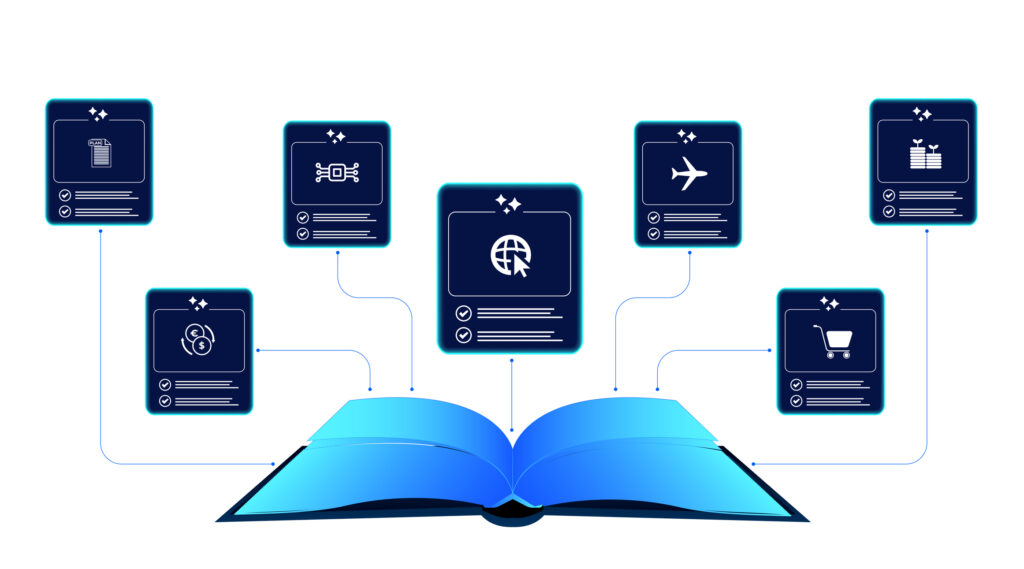
How Self-Healing Knowledge Bases Work: A Closer Look Into Bloomfire’s Content Reliability

Estimate the Value of Your Knowledge Assets
Use this calculator to see how enterprise intelligence can impact your bottom line. Choose areas of focus, and see tailored calculations that will give you a tangible ROI.

Take a self guided Tour
See Bloomfire in action across several potential configurations. Imagine the potential of your team when they stop searching and start finding critical knowledge.