
What is Enterprise Intelligence?

Philip is a visionary leader with a track record of scaling high-growth technology companies. As CEO of Bloomfire, he is driving innovation to help businesses unlock the full value of their Enterprise Intelligence, empowering teams to move faster, collaborate more effectively, and make better-informed decisions.

This resource was originally published in March 2025. It was updated with new content and data in July 2026.
Quick answer: Enterprise Intelligence is a strategic framework that integrates Business Intelligence (BI), Enterprise Search (ES), and Knowledge Management (KM) into one dynamic knowledge ecosystem. It keeps structured and unstructured data continuously updated, contextualized, and surfaced in real time, so employees get the right insight the moment they need it.
Companies that unlock Enterprise Intelligence unify information flow across every department, moving beyond passive systems toward real-time knowledge activation that empowers people and processes at scale. For decades, organizations have relied on business intelligence for structured data analysis, enterprise search for retrieving documents, and knowledge management for storing institutional knowledge. But these systems were never designed to work together.
As a result, information often remains fragmented across departments, slowing down decision-making and increasing inefficiencies. This guide explores what Enterprise Intelligence is all about, why it matters, and how you can start leveraging the tools that maximize its value.
Enterprise Intelligence Explained
Enterprise Intelligence is best understood as a system, not a single tool. It works by unifying three layers that most organizations already have in some form: structured data in BI and customer relationship management (CRM) systems, documents and files indexed by enterprise search, and institutional knowledge captured in the best KM platforms. On their own, each layer solves part of the problem. Unified through Enterprise Intelligence, these systems close the gap between having information and how to use it.
That gap is bigger than most leaders realize. Knowledge workers spend nearly 20% of the workweek looking for internal information or tracking down colleagues who can help. Much of what they are searching for is unstructured (e.g., emails, call transcripts, chat threads, and documents that never make it into a tidy database).
Additionally, Gartner estimates that 80% to 90% of enterprise data now falls into this unstructured category, and it is growing far faster than structured data. Traditional BI, ES, and KM tools were built for a world where most valuable data was structured and static. That world no longer exists.
The Three Pillars of Enterprise Intelligence
As established above, the Enterprise Intelligence solution is built on three foundational disciplines or pillars of information management. Together, these pillars create a unified, always-on knowledge ecosystem that transforms disconnected data and content into actionable intelligence in the flow of work.
| Enterprise Intelligence Pillar | Definition |
|---|---|
| Business Intelligence (BI) | The practice of analyzing structured data, such as sales figures or operational metrics, using dashboards and reports to track performance and identify trends. |
| Enterprise Search (ES) | Technology that indexes and retrieves content, documents, and data across an organization’s systems so employees can locate information from a single search experience. |
| Knowledge Management (KM) | The practice of capturing, organizing, and preserving institutional knowledge so critical information is retained and reusable across the organization. |
Each component influences how organizations gather, process, and apply knowledge. By integrating these functions into a unified Enterprise Intelligence system, businesses can unlock the full potential of their knowledge assets.
Business Intelligence (BI)
Business Intelligence (BI) collects, analyzes, and visualizes structured data to help organizations track key performance indicators, identify trends, and optimize operations. It pulls data from enterprise resource planning (ERP), CRM, and other business systems to generate reports and dashboards.
BI’s Limitation
While enterprise business intelligence is valuable for analyzing past performance, it does not provide real-time predictive insights or account for unstructured knowledge such as customer insights, market research, or historical expertise. As a result, decision-makers often act on an incomplete picture, missing the context that lives outside structured databases.
How Enterprise Intelligence enhances BI
It moves beyond static reporting by integrating unstructured data and AI-driven insights, transforming BI from a retrospective tool into a proactive decision-making engine that helps businesses predict trends and act on opportunities in real time. Blending qualitative and quantitative signals gives leaders a fuller, more current view than dashboards alone can offer.
Enterprise Search (ES)
Enterprise Search (ES) enables employees to quickly locate documents, emails, and data across multiple systems. It is designed to improve information retrieval but does not validate or prioritize content for relevance or accuracy.
ES’ Limitation
ES helps find information, but it doesn’t guarantee that the information is correct, complete, or applicable to the user’s needs. Employees often waste time sorting through redundant, outdated, or trivial (ROT) content. This added friction slows decision-making and can erode trust in the search tool itself over time.
How Enterprise Intelligence enhances ES
It transforms search into proactive discovery, automatically surfacing the most relevant, high-quality insights instead of requiring employees to dig for answers. This shift not only saves time but also ensures the information or data employees act on is trustworthy and current.
Knowledge Management (KM)
Knowledge Management (KM) captures and organizes institutional knowledge, making it available for employees to reference and apply. It helps businesses preserve best practices, historical insights, and operational expertise that might otherwise be lost.
KM’s Limitation
Many KM systems are passive repositories that require manual updates. Over time, they can become outdated or fragmented, making it difficult for employees to trust or effectively use the information. Without ongoing curation, valuable expertise can sit unused or get buried beneath duplicate and conflicting content.
How Enterprise Intelligence enhances KM
It turns KM into the connective tissue between BI and ES, enabling knowledge to evolve continuously through AI-powered validation, self-healing knowledge bases, and real-time insight delivery. This continuous evolution keeps institutional knowledge accurate and actionable, rather than letting it stagnate as a static archive.
Rather than relying on employees to manually organize and retrieve knowledge, Enterprise Intelligence ensures that knowledge finds them, delivering the right insights at the right time. This shift turns knowledge from a static repository into an active, always-on advantage that continually compounds in value across the business.
Enterprise Intelligence Vs. Traditional BI, ES, and KM Tools
The table below summarizes how Enterprise Intelligence differs from the standalone tools it builds on.
| Capability | Traditional BI | Traditional ES | Traditional KM | Enterprise Intelligence |
|---|---|---|---|---|
| Data covered | Structured data only | Indexed documents and files | Manually curated institutional knowledge | Structured and unstructured data, unified |
| Update cadence | Periodic reports and dashboards | Refreshed on each search query | Updated manually, often infrequently | Continuous, real-time refresh |
| How insight is delivered | Dashboards employees must check | Search results employees must sort through | Static repository employees must browse | Proactively surfaced in the flow of work |
| Validation | Analyst-reviewed | Not validated for accuracy | Rarely audited for accuracy | AI-validated, self-healing |
| Predictive capability | Limited to historical trends | None | None | AI-driven, forward-looking |
Taken together, the table makes clear that Enterprise Intelligence isn’t a replacement for BI, ES, or KM investments already in place. Instead, it is the layer that connects them and keeps them current. Organizations that adopt Enterprise Intelligence don’t rip out their existing systems; they connect them to a unified layer that validates and delivers what those systems already contain.
Enterprise Intelligence Vs. Enterprise General Intelligence
Enterprise Intelligence is easy to confuse with a newer, related term, Enterprise General Intelligence (EGI). The two describe different layers of the same AI-driven enterprise, and the distinction is worth being precise about.
| Enterprise Intelligence | Enterprise General Intelligence (EGI) | |
|---|---|---|
| Core focus | Unifies and validates an organization’s knowledge across BI, ES, and KM | Builds AI agents that act reliably and consistently on that knowledge |
EGI, a term popularized by Salesforce in 2025, describes artificial Intelligence (AI) systems built for business use that combine high capability, the ability to reason across complex, cross-system tasks, with high consistency, reliable and governed performance in production. It is a deliberate contrast to Artificial General Intelligence (AGI), which aims to replicate human-level intelligence across any domain and remains largely theoretical. EGI is about how dependable and autonomous an AI agent can be inside real business workflows today.
Enterprise Intelligence is the knowledge foundation that makes reliable AI agents possible in the first place. An AI agent, however capable, is only as good as the knowledge it can access, trust, and act on. Enterprise Intelligence is what unifies, validates, and delivers that knowledge; EGI and agentic AI more broadly describe what acts on it.
Put simply, Enterprise Intelligence is the intelligence layer, and EGI describes the agents that operate on top of it. Organizations pursuing agentic AI initiatives without first solving fragmented, unvalidated knowledge often find their agents inherit the same inconsistency and outdated information that plagued their legacy search and KM tools.
Why Businesses Need Enterprise Intelligence
As organizations become more data-driven, they need knowledge systems that adapt and evolve alongside them. Enterprise Intelligence ensures that knowledge is not just stored but actively used to drive business outcomes, closing the gap between the information a company has and the decisions its people are actually able to make with it.
The business case is well documented. Organizations with strong knowledge management practices make measurably better and faster decisions, see stronger collaboration and customer outcomes, and carry less compliance and reputational risk from outdated information. The section below breaks down where that value shows up in more detail and which industries are seeing the biggest returns.
Key Benefits of Enterprise Intelligence
Enterprise Intelligence delivers measurable, organization-wide impact when knowledge, search, and insights work together seamlessly. The following findings are based on Bloomfire’s Value Report, which surveyed employees across a range of industries.
- Less time wasted searching: Employees may spend up to 20% of their time searching or duplicating work; optimized KM reduces barriers to access by nearly 59%.
- Stronger collaboration and innovation: Strong KM drives 10% gains in cross-functional collaboration and 12% in team efficiency, while cross-team sharing and best practices improve product outcomes by 20 to 36%.
- Higher engagement and retention: 98% of employees prefer organizations where people share work knowledge, and 46% say better sharing would make their days significantly more productive.
- Better customer outcomes: Enterprise Intelligence improves customer metrics such as effort, satisfaction, first-contact resolution, and retention by powering both agents and self-service with a single, trusted knowledge base.
- Lower knowledge risk: Treating knowledge as a managed asset helps prevent knowledge drain, avoid outdated information contaminating AI and decisions, and reduce compliance and reputational risk.
- Faster onboarding and ramp time: New hires reach full productivity faster when they can find validated answers instead of relying on tribal knowledge passed along by colleagues.
- Reduced duplicate work: Teams stop re-creating reports, decks, and research that already exist elsewhere in the organization, freeing up time for higher-value work.
- More consistent decision-making across teams: When everyone works from the same validated internal knowledge base, decisions made in different departments stay aligned instead of quietly contradicting each other.
- Better returns on other AI investments: Chatbots, copilots, and AI agents are only as good as the knowledge they’re grounded in, so Enterprise Intelligence directly improves the return on investment (ROI) of AI spend elsewhere in the business.
These benefits compound over time. A knowledge base that stays current and trusted becomes more valuable with every use, while one that isn’t maintained decays and gets abandoned. That compounding effect is why the earliest movers on Enterprise Intelligence tend to widen their advantage rather than simply keep pace.
Challenges of Enterprise Intelligence
Enterprise Intelligence delivers significant value, but getting there isn’t automatic. Most organizations underestimate how much of the work is organizational rather than technical. This is because the hardest part isn’t connecting systems, but getting people to trust and use what’s connected. Skipping that groundwork tends to just recreate the same fragmentation problem inside a new, AI-branded tool. Common challenges include:
- Data and knowledge silos: Legacy systems, departmental tools, and years of undocumented tribal knowledge don’t unify on their own; connecting them takes deliberate integration work.
- Content quality and governance: AI can only surface knowledge that is accurate and current. Without clear ownership and validation processes, redundant, outdated, or trivial (ROT) content undermines trust in the system.
- Change management and adoption: Employees who are used to searching manually or asking colleagues need a reason to change habits. Enterprise Intelligence only creates value if people actually use it.
- Integration complexity: Connecting BI, ES, and KM systems, plus the CRMs, ticketing tools, and chat platforms layered on top, requires ongoing technical maintenance, not a one-time project.
- Security and compliance: Surfacing knowledge more broadly and proactively raises the stakes on access controls, data privacy, and regulatory compliance, particularly in regulated industries.
- Measuring ROI: Because the value of Enterprise Intelligence shows up as time saved, faster decisions, and avoided mistakes, it can be harder to quantify upfront than a traditional software business case.
None of these challenges are reasons to avoid Enterprise Intelligence; they’re reasons to sequence the rollout deliberately. Organizations that tackle governance and change management alongside the technical integration see a much faster path to value than those that treat Enterprise Intelligence as a pure software deployment.
How Enterprise Intelligence Works With AI
AI is the layer that makes Enterprise Intelligence active rather than passive. Adoption has moved from experimental to mainstream: 88% of organizations now report regular use of AI in at least one business function, and 71% regularly use generative AI specifically, according to McKinsey’s 2025 State of AI research. Enterprise Intelligence puts that AI to work directly on the knowledge problem in a few specific ways:
- Semantic AI search and retrieval: AI understands intent and context, not just keywords, so employees get relevant answers even when they don’t know the exact terminology to search for.
- Generative answer synthesis: Instead of returning a list of documents, AI can synthesize a direct answer, grounded in and citing the underlying trusted content.
- Self-healing content validation: AI continuously scans the knowledge base for outdated, conflicting, or redundant content and flags or resolves it, rather than letting knowledge quality decay over time.
- Proactive, in-workflow delivery: AI surfaces relevant knowledge inside the tools people already use, such as a CRM or support console, rather than waiting for someone to search.
- Hallucination prevention: Because responses are grounded in an organization’s own validated content and cite their sources, AI answers are checkable rather than fabricated.
It is crucial to understand that if the underlying knowledge is fragmented or untrustworthy, these capabilities can fall short. This is exactly why Enterprise Intelligence treats the knowledge layer and the AI layer as inseparable.
How Industries Leverage Enterprise Intelligence
Enterprise Intelligence applies to any organization drowning in fragmented knowledge, but the specific value it unlocks looks different by industry. Some of the sectors seeing the clearest impact include:
- Financial services: Connecting compliance documentation, product knowledge, and CRM data so advisors and support teams give consistent, accurate answers under regulatory scrutiny.
- Insurance: Unifying policy documentation, claims history, and underwriting guidelines so agents and adjusters resolve cases faster and more consistently.
- Healthcare: Giving clinical and administrative staff a single, validated source for protocols and policies, where outdated information carries real patient-safety risk.
- Manufacturing: Connecting engineering documentation, safety procedures, and operational data across plants and shifts to reduce downtime and repeat errors.
- Energy and industrial operations: Centralizing technical documentation and safety knowledge for distributed, asset-heavy operations where institutional knowledge often lives with a shrinking, experienced workforce.
- Law firms and legal services: Making precedent, past work product, and matter history searchable and reusable, rather than siloed by practice group or individual attorney.
- Credit unions: Unifying member-facing and back-office knowledge so service stays consistent across branches and channels.
- Government and education: Connecting policy, curriculum, or constituent-facing information across departments that often operate independently.
The common thread across these industries is scale. The more distributed the workforce, the more regulated the environment, or the more institutional knowledge is at risk of walking out the door, the bigger the return on unifying it. Even outside these sectors, any organization with more than a handful of departments is likely to see the same pattern once it looks closely at where its knowledge actually lives.
How Mature Is Your Organization’s Enterprise Intelligence?
Not every organization is at the same stage of Enterprise Intelligence adoption, and that’s expected. Maturity typically progresses through five levels, moving from knowledge that is simply captured and searchable to a fully adaptive system where AI agents actively manage and update knowledge in real time.
| Level | What It Looks Like | Key Sign |
|---|---|---|
| Captured | Knowledge is documented in systems of record and connected via search. Access is mostly static and compliance-driven; AI support is limited to basic search and summaries. | You’ve built a searchable foundation, but insights don’t yet flow where work happens. |
| Connected | Systems and departments begin to link together. APIs connect HRIS, CRM, BI tools, and the knowledge platform; AI helps curate content, tag knowledge, and generate recommendations. | Employees can subscribe to the knowledge that matters to them, and duplication starts to drop. |
| Context-Aware | Insights surface inside workflows, tuned to role and behavior. AI agents identify gaps, predict needs, and adapt in real time. | Knowledge finds the user, not the other way around. |
| Orchestrated | AI proactively recommends pivots, flags risks, and routes work. Knowledge bases self-heal, removing outdated or redundant content. | Workflows adapt automatically, reducing friction and accelerating decisions. |
| Adaptive | The enterprise operates as a fully intelligent system. Distributed AI agents act as embedded collaborators, aligning goals to actions and updating knowledge in real time. | Knowledge continuously renews itself, and employees focus on interpretation and innovation, not information hunting. |
Maturity is also measured across seven dimensions of the business: Strategic Alignment, Operational Efficiency, Change & Adaptability, Talent & Culture, Commercial Excellence, Customer Experience, and Risk Management. Most organizations aren’t at the same level across every dimension. A company might be Context-Aware in Operational Efficiency but still stuck at Captured in Risk Management, for instance.
Knowing where an organization sits matters because knowledge flow is mission-critical to every one of those dimensions. When it’s blocked, decision-making slows, employees disengage, and value leaks out of the business. Benchmarking maturity gives leaders a concrete way to diagnose where knowledge is breaking down, prioritize investment, and track progress over time, rather than treating AI adoption as a single yes-or-no milestone.
Did You Know? Bloomfire’s Enterprise Intelligence Maturity Index scores organizations across these five levels and seven dimensions, giving leaders a benchmark for where they stand today and a roadmap for what to prioritize next.
How to Get Started with Enterprise Intelligence
Enterprise Intelligence is a journey, as opposed to a single implementation. Most organizations that succeed start small and expand deliberately. Consider these steps to start harnessing and leveraging Enterprise Intelligence.
Building an AI-Powered Knowledge Strategy
- Identify a high-value area. Look for a team or process where inconsistent knowledge or slow access to answers is clearly hurting performance, such as customer support or sales enablement.
- Centralize the most critical knowledge. Bring the highest-value content for that area into a single, trusted source instead of leaving it scattered across drives, tickets, and chat threads.
- Connect key data sources. Link that centralized knowledge to the business systems, such as CRM or support platforms, that generate relevant structured data.
- Activate with AI. Use AI to surface and refine insights in the flow of work, so employees receive answers where they already work instead of searching for them.
- Expand deliberately. Once value is clear in the first area, extend the same model to additional teams and use cases.
The platform choice matters at this stage. If you want seamless capture, storage, and use of data, information, and insight, look for a platform with clear capabilities that support these functions. For example, if you choose Bloomfire, software designed to power Enterprise Intelligence, you get a combined AI-powered discovery, self-healing content validation, and proactive insight delivery in a single platform. You don’t have to stitch together separate BI, ES, and KM tools to get the benefits of Enterprise Intelligence.
Most organizations see measurable time savings within the first quarter of a focused rollout, well before all five steps are fully in place. The organizations that get the most value treat this as an ongoing practice rather than a project with an end date, revisiting priorities as new teams and use cases come online.
The Future of Knowledge is Enterprise Intelligence
Organizations that embrace Enterprise Intelligence move from simply storing knowledge to continuously activating it in the moments that matter most. As AI and automation reshape how work gets done, the real differentiator will be an organization’s ability to connect, refine, and apply knowledge in real time, turning information into a durable competitive advantage.
Enterprise Intelligence doesn’t replace knowledge management; it evolves it. When knowledge management is connected with BI, enterprise search, and AI-driven automation, knowledge stops being passive reference material and becomes an active driver of outcomes, innovation, and alignment.
Unlock Enterprise Intelligence
See how Bloomfire powers real-time, AI-driven knowledge activation across your entire business.
Learn More
Enterprise Intelligence builds on knowledge management by integrating it with business intelligence and enterprise search. It uses AI to surface real-time insights, actively refine knowledge, and deliver information in the flow of work, moving beyond static storage to dynamic, decision-driving knowledge activation.
No. Instead of replacing existing systems, Enterprise Intelligence connects and enhances them—unlocking the full value of structured and unstructured data by making insights more contextual, accessible, and actionable.
High-impact use cases include sales enablement, customer support, onboarding and training, operations, and leadership decision-making. Enterprise Intelligence is relevant for companies when people need fast, consistent, and context-rich answers, rather than isolated reports or scattered documents.
Employees spend less time hunting for information and more time applying it. Instead of jumping between systems, tabs, and folders, they receive direct, contextual answers and recommendations where they already work, reducing frustration, speeding up decisions, and making expertise feel accessible rather than hidden.
AI powers insight surfacing, identifies gaps, flags redundant, conflicting, or outdated content, and enables predictive knowledge delivery, creating a self-improving system that supports smarter, faster decision-making across the enterprise.
A practical first step is to identify a high-value area where inconsistent knowledge or slow access to answers is clearly hurting performance. Centralize the most critical knowledge for that area, connect it with key data sources, and begin using AI to surface and refine insights in the flow of work; then expand to additional teams and use cases as value becomes clear.
Philip is a visionary leader with a track record of scaling high-growth technology companies. As CEO of Bloomfire, he is driving innovation to help businesses unlock the full value of their Enterprise Intelligence, empowering teams to move faster, collaborate more effectively, and make better-informed decisions.
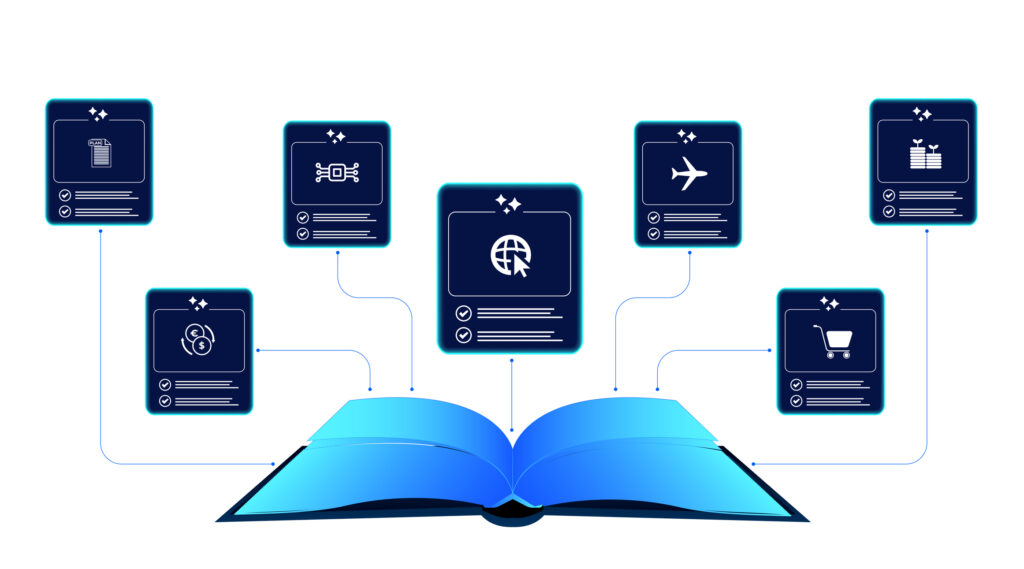
How Self-Healing Knowledge Bases Work: A Closer Look Into Bloomfire’s Content Reliability

How Conflicting Content Detection Protects Answer Accuracy
Salesforce Einstein + Bloomfire: Smarter Answers Inside the CRM

Build your knowledge ecosystem
Connect knowledge pools of documents, conversations, media, data, and expertise with your Persistent Semantic Memory™ to ground your AI. Use our turn-key of connectors or build your own to connect to any enterprise systems.

Sign up for Innovation
The pace of innovation with AI is accelerating. Join an alpha group for early access to new turnkey Intelligence Modules, and help shape what comes next.