
What Is Coveo? A Guide to Its AI Enterprise Search Platform

The Bloomfire Editorial Team delivers insights, best practices, and industry news for knowledge management professionals. With expertise in collaboration, knowledge sharing, and AI-driven technology, they provide valuable content to help organizations navigate today’s digital workplace.
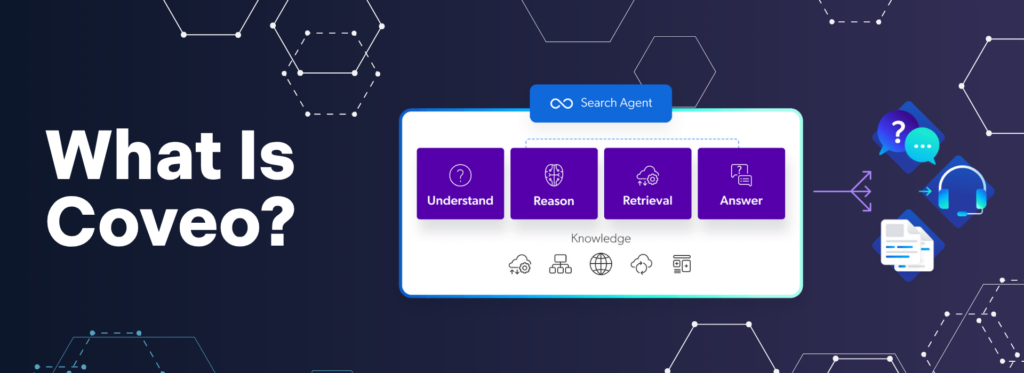
Coveo is an AI-powered enterprise search and relevance platform designed to help organizations surface the right information at the right moment across websites, intranets, customer support portals, and commerce experiences. As organizations face growing pressure to make AI work at scale in 2026, the platform has established itself as a leader in AI-Relevance.
At its core, Coveo connects scattered enterprise knowledge websites and intranets to CRM systems and customer portals, all in a single, AI-enriched index. When connected, it becomes a platform that retrieves information and learns from user behavior to continuously improve the relevance of every experience it powers. Read on to learn more about Coveo, how it’s evaluated by real users, and whether it’s the right choice for your organization.
Pros and Cons of Coveo
Like any enterprise platform, Coveo has genuine strengths and meaningful limitations. Understanding both helps organizations make informed decisions about whether it fits their enterprise intelligence strategy.
Strengths
Coveo’s benefits lie in its strong AI-powered enterprise search engine, which ensures employees can remain efficient, productive, and knowledgeable in their work. The strengths in using Coveo include:
- AI-powered relevance: Coveo applies machine learning (ML) to continuously improve search results based on user behavior, surfacing the most relevant content without requiring manual tuning.
- Broad connector library: The platform integrates with a wide range of enterprise systems, including Salesforce, ServiceNow, Microsoft SharePoint, and Confluence. This allows organizations to federate search across many content sources.
- Personalization at scale: Coveo tailors results to individual users based on their role, past behavior, and context, making it especially valuable for customer-facing portals and self-service support experiences.
- Strong commerce use case: Coveo is widely deployed on e-commerce and digital experience platforms, powering product discovery and recommendation engines.
- Analytics and usage insights: The platform provides detailed insights into search behavior, helping teams identify content gaps and optimize what is surfaced.
With Coveo, employees can effectively search across all their systems to find the information they need. With strong analytics backing search, organizations can improve search discovery and the content within it.
Limitations
While Coveo’s enterprise search is strong, the platform’s limitations tend to cluster around two themes: the technical complexity of standing it up and sustaining it, and the absence of any knowledge management foundation beneath the search layer.
- Implementation complexity: Coveo is a powerful but technically demanding platform. Deploying it effectively typically requires dedicated IT or developer resources, and initial setup can be time-intensive.
- Search without a knowledge foundation: Coveo indexes content that already exists elsewhere. It does not help organizations create, curate, govern, or retire knowledge. Organizations with fragmented or low-quality content foundations may find that better search simply exposes the problem more visibly.
- Limited knowledge management capabilities: Coveo lacks authoring tools, content verification workflows, Q&A engines, and governance features. It is a search layer, not a knowledge management system.
- Cost at enterprise scale: Pricing reflects the enterprise segment Coveo serves; it can be significant, particularly as connectors, usage, and user counts scale up.
- Relevance requires ongoing tuning: While ML improves results over time, the system needs sufficient query volume and behavioral data to perform well. This is a cold-start challenge for newer or lower-traffic deployments.
Together, these limitations point to a common pattern: Coveo performs best as a powerful access layer on top of a well-governed, high-quality content foundation, but building and maintaining that foundation requires a separate investment entirely. For organizations without a dedicated knowledge management strategy already in place, the return on Coveo’s search capabilities may fall short of expectations.
What Makes a Strong AI Foundation?
See which enterprise platforms are actually built for AI-ready knowledge management.
Download Our 2026 Guide
Key Features of Coveo AI Search
Coveo’s core value proposition is relevance, making it easier for employees, customers, and partners to find the right information across fragmented content ecosystems. Quality features within Coveo include:
- Unified index across 55+ sources: Coveo indexes content from over 55 enterprise systems without requiring data migration, creating a single searchable layer across the organization’s existing tech stack.
- ML-based relevance tuning: Behavioral analytics and machine learning analyze clicks, queries, and conversions to continuously refine result rankings. Query pipelines and A/B testing give technical teams granular control over search behavior.
- Relevance Generative Answering (RGA): Coveo’s generative answering capability extracts contextual, grounded responses from indexed content rather than generating unverified output, thereby reducing the risk of AI hallucination.
- Passage retrieval for RAG: Coveo supports retrieval-augmented generation (RAG) architectures, providing passage-level retrieval that reduces custom infrastructure requirements for AI-powered knowledge experiences.
- Agentic AI capabilities: The platform supports developing AI agents and agentic search workflows to automate information retrieval and decision-support tasks.
- Permission-aware retrieval (early-binding security): Coveo enforces access controls at the index level, ensuring users only see content they are authorized to access. This is a critical requirement for regulated enterprise deployments.
- Analytics & Search Intelligence: Coveo’s analytics suite tracks what users search for, what they click, what returns no results, and where they abandon. This data helps content and product teams identify gaps and optimize the knowledge ecosystem.
For employees, this means less time spent hunting across disconnected systems and more confidence that the results they find are relevant to their role and context. However, the quality of that experience is only as strong as the underlying content. Coveo surfaces what exists, but it cannot fix what is outdated, ungoverned, or missing.
Coveo Pricing Plans: What You Need to Know
Coveo does not publish standard pricing tiers publicly. Like many enterprise platforms, its pricing is negotiated based on:
- The number of content sources and connectors required
- Query and user volumes
- Use case (employee search, customer service, e-commerce)
- AI and generative features enabled
Organizations typically engage Coveo through a direct sales process and custom contract. Budget estimates frequently place Coveo in the higher range for enterprise search platforms, reflecting its ML infrastructure and breadth of integrations.
For organizations evaluating cost-effectiveness, it’s worth comparing not just the license cost but the total investment required. This includes implementation, developer time, ongoing connector maintenance, and the potential need for a separate knowledge management platform to govern the content Coveo will search.
Reviews of Coveo: What are Users Saying?
Across software review sites like G2 and Gartner Peer Insights, Coveo earns consistent recognition for the quality of its AI-driven search relevance. Enterprise reviewers frequently highlight that Coveo’s search has significantly improved content discoverability across their organizations, particularly in customer service and self-service portal contexts.
However, users also surface recurring challenges. Implementation is often cited as complex and resource-intensive, requiring significant technical expertise. Some reviewers note that achieving the platform’s full potential demands ongoing optimization, which can strain internal teams without dedicated search administration resources.
A common theme in critical reviews is the dependency on content quality: Coveo’s search makes existing content more findable, but organizations with fragmented, outdated, or poorly structured knowledge repositories find that the platform exposes those gaps rather than solving them. Several reviewers note that combining Coveo with a robust knowledge management system is what ultimately unlocked value.
How Bloomfire Compliments Coveo

Coveo and Bloomfire occupy different but adjacent layers in an enterprise intelligence architecture. Coveo is the access layer: built to retrieve and surface information across systems at the moment someone needs it. Bloomfire is the knowledge foundation layer: built to ensure that information is worth retrieving in the first place. Understanding that distinction is what makes the pairing so practical.
Based on the 2026 Guide to Enterprise Intelligence Systems, here’s where Bloomfire directly complements what Coveo can’t do on its own:
- Content creation and authoring: Coveo indexes content that already exists elsewhere, but it has no tools to help teams actually build it. Bloomfire gives KM managers and subject matter experts dedicated authoring capabilities to create structured, purposeful knowledge assets from the ground up.
- Verification and certification workflows: Coveo has no mechanism to distinguish verified knowledge from outdated or unreviewed content. Bloomfire’s approval and certification workflows ensure that what gets indexed has been reviewed, approved, and is trusted as accurate before Coveo ever surfaces it.
- Tacit knowledge capture: Much of what organizations know lives in people’s heads, not in documents. Bloomfire’s Q&A engine, community engagement tools, and collaborative features convert frontline expertise and institutional know-how into structured, searchable content. The kind of content that makes Coveo’s retrieval useful.
- Content governance and lifecycle management: Bloomfire actively manages knowledge health by flagging content that’s redundant, outdated, or trivial, and routing it through retirement workflows. Without this, Coveo risks surfacing stale information at scale, which erodes trust in AI-powered answers over time.
- Analytics that improve the knowledge base, not just search behavior: Coveo’s analytics are oriented around search performance: what people clicked, what returned no results. Bloomfire’s analytics are oriented around knowledge health: what content is underperforming, what gaps exist, and where curation effort should be focused next.
- A single source of certified truth: Coveo aggregates content across many systems, which means it inherits whatever quality exists in each of them. Bloomfire establishes a dedicated, governed knowledge hub that gives Coveo something reliable to index.
Organizations that invest in both aren’t doubling up on their stack. They’re building the two layers that a mature Enterprise Intelligence architecture actually requires: one that governs knowledge, and one that delivers it.
Is Coveo Right for Your Organization?
Coveo is a compelling choice for large enterprises with complex, multi-source content ecosystems. Its machine learning capabilities improve search relevance over time, and its personalization engine adds real value in high-volume customer-facing and employee self-service environments.
However, organizations should consider carefully whether search alone is sufficient, as AI performance is directly tied to the quality and governance of the underlying knowledge. If your organization’s content is fragmented, outdated, or ungoverned, better search will surface those problems rather than solve them. For organizations that need search and a governed knowledge foundation in one integrated platform, Bloomfire offers a unified path to enterprise intelligence.
Elevate Your Knowledge Stack
Discover why leading teams choose Bloomfire over fragmented search tools.
Try Our Demo!
Coveo deployments vary significantly based on the complexity of your content ecosystem and the number of sources being connected. Simpler use cases can go live faster, but most enterprise deployments can take several months. Organizations should plan for dedicated IT or developer resources throughout setup, plus an ongoing optimization period as the ML models build behavioral data and improve over time.
Coveo is primarily designed for mid-market to enterprise organizations, and its pricing, implementation complexity, and technical requirements reflect that. While the platform does offer tiered plans, typical implementations for mid-market customers begin at approximately $10K+ per month and require annual commitments. This makes it a significant investment for smaller teams.
Coveo AI works by building a unified index across your connected content sources, then applying machine learning to continuously improve result rankings based on user behavior. For direct answers, its RGA model retrieves the most relevant content chunks from your index and grounds its responses in that content, reducing hallucination risk. The more queries the system processes, the smarter and more accurate its recommendations become over time.
Basic site search tools index a single website or content source and return keyword-matched results. Coveo operates at a fundamentally different level, using AI-driven relevance analysis tied to search behavior, product attributes, and conversions to rank results. It also layers in personalization, generative answering, and analytics that basic search tools simply don’t offer.
No, Coveo is a search and relevance layer. It makes existing content more findable, but it does not help organizations create, verify, govern, or retire knowledge. Organizations that need both capabilities in one platform should evaluate dedicated Enterprise Intelligence solutions like Bloomfire.
The Bloomfire Editorial Team delivers insights, best practices, and industry news for knowledge management professionals. With expertise in collaboration, knowledge sharing, and AI-driven technology, they provide valuable content to help organizations navigate today’s digital workplace.
How Self-Healing Knowledge Bases Work: A Closer Look Into Bloomfire’s Content Reliability

How Conflicting Content Detection Protects Answer Accuracy

Salesforce Einstein + Bloomfire: Smarter Answers Inside the CRM

Build your knowledge ecosystem
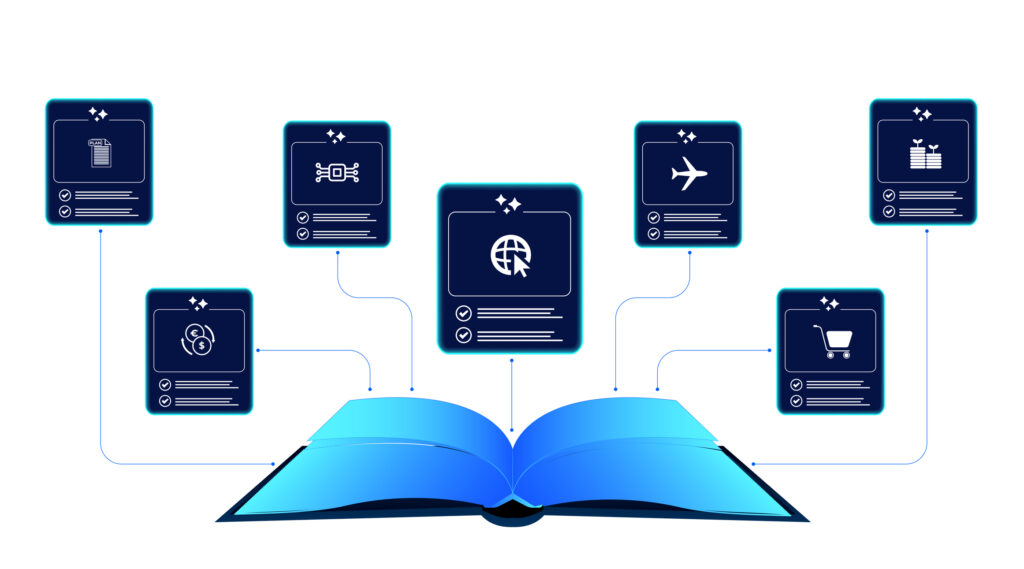
Connect knowledge pools of documents, conversations, media, data, and expertise with your Persistent Semantic Memory™ to ground your AI. Use our turn-key of connectors or build your own to connect to any enterprise systems.

Sign up for Innovation
The pace of innovation with AI is accelerating. Join an alpha group for early access to new turnkey Intelligence Modules, and help shape what comes next.