
How Does Bloomfire Improve Knowledge Retention?

The Bloomfire Editorial Team delivers insights, best practices, and industry news for knowledge management professionals. With expertise in collaboration, knowledge sharing, and AI-driven technology, they provide valuable content to help organizations navigate today’s digital workplace.

Knowledge loss shows up quietly when a tenured employee changes roles, when a workaround lives only in a Slack thread, or when the one person who “knows how things really work” goes on leave and everyone else stalls. Over time, those moments add up to longer onboarding, slower decisions, and teams rebuilding the same knowledge from scratch. Bloomfire improves knowledge retention through Synapse, Content Reliability, and Learn and Confirm, capturing expertise as it’s created, keeping it accurate through automated content governance, and confirming it’s actually been understood long after the original author has moved on.
In this piece, we’ll define what effective knowledge retention looks like today, why shared drives and ad hoc documentation can’t keep up, and how Bloomfire turns retention into a built-in habit instead of a last-minute scramble. Along the way, we’ll look at how Synapse, Content Reliability, and Learn and Confirm help organizations keep what they’ve already learned and put it back in front of people and AI systems exactly when they need it.
What Is Knowledge Retention (and Why Is It So Hard)?
Knowledge retention is the process of preventing knowledge loss by turning individual know-how into a shared, durable asset, instead of something that only lives in one person’s head. Every time an employee leaves, changes roles, or simply forgets a detail from a project two years ago, a piece of the organization’s collective intelligence goes with them.
A study on tacit knowledge loss found that about 80% of HR managers surveyed identified voluntary resignation as the leading driver of institutional knowledge loss, with the absence of a formal retention strategy compounding the problem in nearly every case examined. That finding underscores what most organizations experience firsthand: knowledge loss isn’t a rare event tied to a handful of exits, it’s a structural risk that compounds every time someone leaves without a system in place to capture what they knew. Most companies never built the infrastructure to make knowledge retention easy, so information gets scattered across email threads, shared drives, Slack messages, and the memories of a handful of tenured employees.
4 Ways Bloomfire Solves Knowledge Retention Challenges
With Bloomfire, knowledge retention usually breaks down in a few predictable places: answers get trapped in people’s heads, content goes out of date, and no one is sure whether critical updates landed with the right teams. Bloomfire was built around a simple idea: knowledge that isn’t captured, kept current, and easy to find might as well not exist. We’ll look at four specific ways Bloomfire closes those gaps.
1. Synapse Turns Institutional Knowledge into Instant, Cited Answers
Synapse is Bloomfire’s conversational AI, and it provides verified answers to questions instead of just pointing people toward a folder or document where the answer might be. Employees can ask a question in plain language and get a focused response grounded exclusively in certified content, complete with sources they can click to verify. No digging through files, no tracking down the one colleague who might know, might be out sick, or might not work there anymore.
Synapse offers a Fast mode for everyday questions and a Thinking mode for deeper, multi-part analysis, and it asks clarifying questions rather than guessing when a prompt is vague. Because every answer is permission-aware and traceable to its source, a new hire on day one can get the same quality of answer as finding the one veteran employee who “just knew” the process. This breaks the cycle of knowledge concentrating in a handful of people instead of the organization as a whole.
2. Content Reliability Keeps Retained Knowledge Trustworthy Over Time
Bloomfire’s Content Reliability continuously scans the knowledge base to detect duplicate and conflicting information automatically. It flags issues before outdated or contradictory content spreads or reaches an AI response.
Every process changes eventually: tools get replaced, policies get updated, teams get restructured, and a self-healing knowledge base means retained knowledge doesn’t become a liability the moment something changes. Side-by-side comparisons and guided workflows make it fast for content owners to resolve conflicts, so the organization never has to choose between having documentation and having accurate documentation.
3. Learn and Confirm Proves Knowledge Was Actually Absorbed
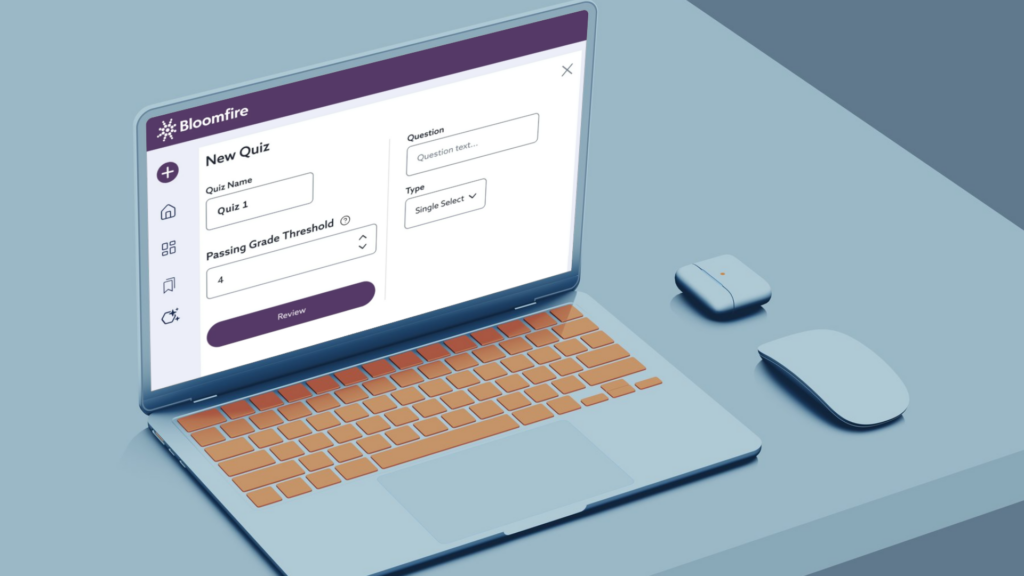
Publishing a process document isn’t the same as making sure someone understood it, and that gap is where a lot of retained knowledge quietly fails. Bloomfire’s Learn and Confirm feature lets teams attach short knowledge checks or simple acknowledgments directly to a post, so leaders get a timestamped, auditable record that critical information was reviewed and understood.
Knowledge checks test comprehension with built-in quizzes, while acknowledgments handle mandatory communications like policy updates with a single confirmation. That distinction matters most for compliance-heavy or frontline teams, where knowing information exists somewhere isn’t good enough. Leaders need proof it landed with the right people.
4. AI-Powered Authoring Removes the Biggest Excuse Not to Document
The people with the most valuable institutional knowledge rarely enjoy writing it down, and that friction is why so much expertise never gets captured. Bloomfire’s AI-powered authoring tools generate summaries and titles from uploaded content, auto-tag topics using natural language processing, and help combine related knowledge into a shareable series. This turns a rough recording or a messy draft into structured, searchable content in minutes. Lowering the effort required to document something is often the difference between knowledge captured before someone leaves and knowledge gone the moment they walk out the door.
CTA:
Title (35 characters): Ready to Stop Losing Knowledge?
Description (85 characters): See how much time and risk your team could save with a Self-Healing Knowledge Base
Link: Take a FREE Test Drive
Real Results: Knowledge Retention in Action
The impact shows up in the numbers. Bloomfire users report saving 3.9 hours per week by using a knowledge management platform, reducing search retrieval time from an average of 8.5 hours a week down to 4.6. Plus, access barriers to critical information dropped by 59% in organizations that centralized their knowledge base instead of leaving it scattered across individual inboxes and drives.
These aren’t abstract efficiency gains. Every hour not spent tracking down a former employee’s process notes is an hour a team spends actually doing the work, and every piece of knowledge captured before someone leaves is a risk the business no longer has to absorb. Here are two instances of real organizations improving knowledge retention with Bloomfire.
uBreakiFix
uBreakiFix faced a classic frontline retention problem: critical repair and partner knowledge lived in the heads of a handful of tenured technicians, creating bottlenecks and burning out the experts everyone relied on. So, uBreakiFix implemented a search-first knowledge strategy with Bloomfire, using a certified knowledge base as a single source of truth instead of relying on memorization and word-of-mouth training. The results were substantial: employees found answers 25 to 35% faster and with more confidence from retained knowledge, onboarding time was cut in half, and service call volume held steady even as the store footprint kept growing.
Bord Bia
Bord Bia needed to unify research and insights across a network of international offices where knowledge was fragmented and at constant risk of walking out the door with departing staff. Bord Bia’s Bloomfire-powered knowledge community was built specifically to eliminate duplicated research and reduce the loss of tacit knowledge through turnover, rather than simply centralizing documents for convenience. The organization reported employees saving up to 3.9 hours a week in search time, an 80% improvement in decision accuracy, and a measurable reduction in the risk of institutional expertise leaving with departing employees.
Why Knowledge Retention Is a Strategic Priority Now
The urgency behind knowledge retention is accelerating, not easing. Workforces are more mobile than they’ve been in decades, which compresses the window organizations have to capture what someone knows before they move on to the next role. AI agents built on ungoverned, incomplete institutional knowledge inherit the same blind spots that already exist in the organization.
That’s precisely why Bloomfire pairs conversational AI with self-healing content governance. Synapse is only as reliable as the knowledge base underneath it, and Content Reliability keeps that foundation clean. Organizations that treat retention as a continuous discipline, rather than a one-time documentation push, are the ones positioned to weather turnover, scale AI tools responsibly, and avoid rebuilding the same institutional knowledge from scratch every few years.
Knowledge Retention Is a Built System, Not a Hope
Knowledge retention doesn’t happen because a company hopes employees will document things before they leave. It happens because the organization builds a system that makes capturing, verifying, and finding that knowledge the path of least resistance. Bloomfire’s combination of Synapse, Content Reliability, and Learn and Confirm turns retention from a scramble that happens during an exit interview into a continuous, built-in habit of how the business runs.
Companies that treat it this way avoid losing institutional knowledge and ultimately compound it, building an organization that gets smarter and faster every time someone contributes to it. The difference between a team that scrambles after every departure and one that barely notices comes down to whether retention was ever actually built into the system, or just hoped for.
The Bloomfire Editorial Team delivers insights, best practices, and industry news for knowledge management professionals. With expertise in collaboration, knowledge sharing, and AI-driven technology, they provide valuable content to help organizations navigate today’s digital workplace.

Why Are Your AI Agents Only as Good as Your Knowledge Base?
How Does Bloomfire Improve Knowledge Retention?
How Self-Healing Knowledge Bases Work: A Closer Look Into Bloomfire’s Content Reliability

Estimate the Value of Your Knowledge Assets
Use this calculator to see how enterprise intelligence can impact your bottom line. Choose areas of focus, and see tailored calculations that will give you a tangible ROI.

Take a self guided Tour
See Bloomfire in action across several potential configurations. Imagine the potential of your team when they stop searching and start finding critical knowledge.