
Why Are Your AI Agents Only as Good as Your Knowledge Base?

The Bloomfire Editorial Team delivers insights, best practices, and industry news for knowledge management professionals. With expertise in collaboration, knowledge sharing, and AI-driven technology, they provide valuable content to help organizations navigate today’s digital workplace.

Quick Answer: Your AI agents are only as good as your knowledge base because they do not invent expertise; they repeat what your content tells them. Clean, current, well-structured knowledge produces accurate, trustworthy answers. Messy, outdated content creates confident-sounding errors at scale.
Artificial intelligence (AI) agents are becoming the front door to company knowledge, from customer support and sales enablement to internal help desks. When they work, they feel magical: employees get instant answers, customers resolve issues on their own, and teams finally escape the swivel chair between tools and search tabs.
But in most organizations, that experience is fragile. The knowledge based agents in AI that shine in a proof of concept start quoting outdated policies, pulling conflicting documentation, or missing obvious answers once they are connected to real-world content. This piece breaks down why AI knowledge base software quality is the real ceiling on AI agent performance, and how to design, govern, and audit your knowledge so agents stay accurate at scale.
How AI Agents Use Your Knowledge Base
Most AI agents run on retrieval-augmented generation, or RAG. The system searches your AI knowledge base software for content that matches a question, pulls the most relevant passages into the AI’s prompt, and generates an answer using only that retrieved context.
Think of it like an open-book exam. A traditional AI model answers from memory. A RAG-powered agent opens the textbook first, checking your company content before it responds. This is a real advantage. It reduces the model’s tendency to make things up, and it lets you update the textbook any time without retraining the AI.
But the retrieval step does not judge whether a document is correct, only whether it looks relevant to the question. If your knowledge base has three versions of the same return policy, the agent might retrieve the outdated one and deliver it with full confidence.
For example, a customer asks about your current return window. The agent finds an old policy from two years ago sitting next to the current one, pulls the wrong version, and confidently tells the customer they have 60 days to return a product when the real policy is 30 days. The customer acts on that answer, and a simple policy update suddenly turns into a refund dispute and an escalation.
Teams get accurate responses only when the AI has relevant, certified company knowledge to draw from.
Common Knowledge Base Problems That Break AI Performance
Knowledge quality problems show up consistently across enterprise AI deployments. When AI agents underperform, the root cause is usually not the model, but the information it can see: stale documents that never got archived, conflicting versions of the same policy, and content with no clear owner or structure. In other words, the technology usually works. The knowledge feeding it usually does not.
The gap traces back to four recurring problems:
- Outdated content stays in circulation. Old documents still score as “relevant” because retrieval systems match on text and semantics, not on freshness. The agent then presents a stale policy or price as if it were today’s answer, with no built-in warning to the user.
- Conflicting documents confuse retrieval. When multiple versions of a policy or process exist, retrieval may pull different ones for similar questions, which leads to inconsistent answers for the same task. Employees experience this as AI changing its mind, even though the root cause is conflicting content, not the model itself.
- ROT buries the signal in noise. Redundant, outdated, and trivial (ROT) content crowds search results and makes it harder for both humans and AI to spot the best source. As low-value material grows, your best answers get pushed down or ignored entirely.
- Missing metadata hides what matters most. Without clear tags for owner, last-updated date, audience, or product line, retrieval systems have to guess which document should win. That guess is often wrong when two similar pieces of content compete to answer the same question.
When your knowledge base is messy, your AI agents simply scale that mess. Instead of clearing up confusion, they spread outdated, conflicting, or hard-to-find answers into more conversations. To turn AI into a real advantage, you first need to redesign the knowledge it relies on, starting with how you structure content, apply metadata, and capture intent.
How to Design Knowledge for AI: Structure, Metadata, and Intent

Fixing AI hallucinations and inaccuracies starts with treating your knowledge base as infrastructure instead of a vault. When you design content for both humans and machines, you make it easier for AI to find, trust, and reuse the right information at the right time. Strong structure, clear ownership, and consistent tagging turn scattered documents into a dependable layer your agents can build on. The four practices below give your knowledge-based agents in AI a cleaner, more trustworthy foundation to work from.
Establish one source of truth per topic
Remove duplicates and archive outdated versions of information so enterprise AI search only ever has one correct answer to find. A robust verification protocol ensures all documentation passes through approval before any automated system or AI agent model can access it. For example, if your return policy changes, update the approved policy page, archive the old version, and link related support articles back to the current source. This lowers the chance that your AI pulls the wrong version of an answer when employees need help fast.
Build a taxonomy that reflects how people think
Design categories and naming conventions around real queries and business processes, not internal reporting lines, so both employees and AI can locate answers without training. Logical information architecture makes every piece of content stand on its own as an authoritative, reusable unit of knowledge. For instance, group “expense reimbursement,” “travel booking,” and “per diem” under a clear “Business Travel” category instead of burying them under separate HR, Finance, and Operations folders. When your structure matches how people ask questions, both search and AI responses feel faster, simpler, and more intuitive.
Enrich content with metadata at the point of creation
Tag content with last-updated dates, ownership, and topic so retrieval systems can filter out stale material automatically. Real-time metadata enrichment through AI-driven tagging keeps a knowledge library organized without constant manual intervention. A new product guide might include tags for product name, customer segment, region, release date, content owner, and review date before it is published. Clear metadata signals which content is current, who owns it, and how it relates to other knowledge, which is exactly what AI systems need to choose the best source.
Score and monitor content health continuously
Assign dynamic reliability scores to content based on user feedback and last-verified dates, so the system knows which documents need attention first. Automated knowledge gap detection can scan support tickets and internal chat logs to flag recurring questions without a documented answer. For example, if dozens of employees search for a new benefits policy but leave without clicking a result, assign an owner to create or update that content. This keeps the knowledge base aligned with what people actually ask.
Thoughtful design is what turns a static archive into a living system your AI agents can trust. Once these foundations are in place, you can see where content is strong, where it is weak, and where it needs to be retired. Next, run a focused knowledge audit so you know exactly which improvements will unlock better AI outcomes fastest.
How to Evaluate and Improve Your Knowledge Base for Better AI Outcomes
A knowledge audit is the starting point for AI readiness. Evaluate the information in your AI knowledge base software, identify gaps, and correct outdated content before scaling any knowledge-based agent in AI on top of it.
- Assess data quality. Document your sources and analyze content for completeness, accuracy, consistency, timeliness, and relevancy. Use a defined checklist to check for duplicates, outdated information, and irrelevant content.
- Evaluate your platform’s capabilities. Confirm your knowledge management system can ingest, cleanse, and transform data at scale, integrate with AI tools, and support semantic search and natural language retrieval.
- Check organizational readiness. Determine whether your data is standardized and error-free, your governance policies are enforced, and your teams are prepared to adopt new AI-driven workflows.
- Document findings and assign ownership. Record your knowledge landscape, including location, format, and quality, so stakeholders have a clear roadmap for what to fix first and who owns fixing it.
- Re-audit on a cadence. Treat this as an ongoing discipline, not a one-time cleanup, so the knowledge base evolves alongside new products, policies, and regulations.
Organizations that get this right turn knowledge from a passive archive into an active, strategic asset, connecting siloed information, resolving content gaps through self-healing processes, and surfacing trusted answers before employees even ask. That is the real differentiator. The AI models available to every company are converging. The quality of the knowledge base behind them is not, and it’s quickly becoming the deciding factor in whether AI agents deliver value or just add noise.
Build an Effective and Accurate Knowledge Base for AI Agents
The gap between companies with reliable AI agents and companies with unreliable ones is rarely about which model they chose. It’s about whether their knowledge base is clean, current, and structured enough for that model to trust. Audit your content, fix the gaps, and give your AI agents the foundation they need to earn that trust every time someone asks a question.
Give Your AI a Trusted Knowledge Base
Bloomfire turns scattered content into an AI-ready knowledge base your teams trust.
Learn How
You will see answers that are outdated, inconsistent across teams, or different from what your experts would say. That is usually a sign your content is duplicated, stale, or missing in key areas, not that the AI model is “broken.”
Treat updates as a regular habit, not a one-time clean-up. When products, policies, or processes change, the related content should be reviewed, updated, or archived as part of that change, so your AI agents are never far behind.
Ownership should be shared: knowledge managers define standards, subject matter experts keep content accurate, and IT or data teams handle integrations and governance. When these groups work together, AI agents have a clear, trusted source of truth to lean on.
The Bloomfire Editorial Team delivers insights, best practices, and industry news for knowledge management professionals. With expertise in collaboration, knowledge sharing, and AI-driven technology, they provide valuable content to help organizations navigate today’s digital workplace.

Why Are Your AI Agents Only as Good as Your Knowledge Base?
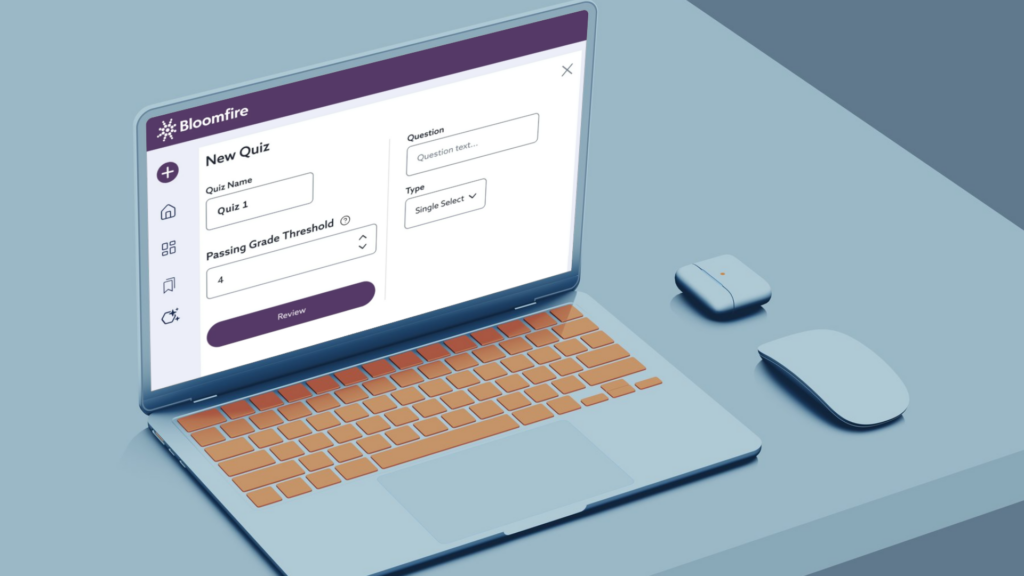
How Does Bloomfire Improve Knowledge Retention?
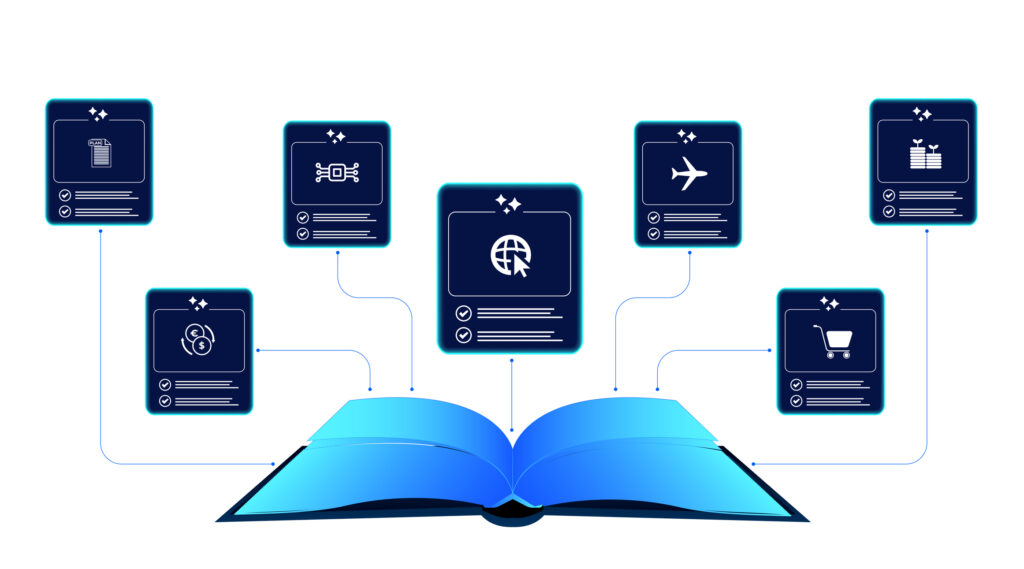
How Self-Healing Knowledge Bases Work: A Closer Look Into Bloomfire’s Content Reliability

Estimate the Value of Your Knowledge Assets
Use this calculator to see how enterprise intelligence can impact your bottom line. Choose areas of focus, and see tailored calculations that will give you a tangible ROI.

Take a self guided Tour
See Bloomfire in action across several potential configurations. Imagine the potential of your team when they stop searching and start finding critical knowledge.