
7 Knowledge Management Metrics to Measure (and Improve) Platform Engagement

Betsy leads the customer success and implementation teams at Bloomfire and is a Certified Knowledge Manager (CKM) from KM Institute. Passionate about the people side of knowledge engagement and knowledge sharing, she brings real-world experience in tackling the challenges companies face with knowledge management.

If your knowledge management (KM) platform isn’t driving measurable engagement, it’s not delivering real business value. Modern KM success isn’t defined by how much content exists, but by how effectively employees use, trust, and contribute to it. In 2026, the organizations winning with knowledge management are those that measure the right signals and act on them quickly.
In this guide, we’ll walk through the most critical knowledge management metrics for 2026: the core KPIs you’ve always needed, plus the AI-era additions you can no longer afford to skip.
What are knowledge management metrics? Knowledge management metrics are a set of quantifiable measurements you can use to monitor performance and prove the ROI of your tech investment. And in this post, we’re delving into which metrics make the most sense for your organization.
Every knowledge management platform has its own unique reports and sets of metrics you can use to monitor performance and usage. The most effective KM leaders focus on a balanced set of indicators that capture contribution, engagement, efficiency, and AI performance.
Here are seven types of knowledge management metrics you should include when measuring your organization’s engagement:
1. Contributions
What it measures: The number of users actively creating or publishing content in the platform, and how frequently.
Contributions are the foundational health signal of any knowledge management system. Knowing how many people are contributing and the frequency of those posts helps you determine whether your workforce is helping grow your knowledge base.
Pay special attention to who is contributing so you can identify your “super users” and use them as a model for how to best leverage the platform. Recent research shows that employees who actively share knowledge tend to be seen as more valuable contributors and experience stronger innovative behaviors, reinforcing that visible contribution behavior drives a virtuous cycle.
What to watch for: If you notice contributions are lacking, this may indicate you need to empower your workforce to share more and provide examples of how to contribute well. A structured content governance framework and contributor recognition program can meaningfully move this metric.
2. Interactions
What it measures: Likes, comments, shares, and other responses to published content.
Contributions are essential, but they don’t mean much unless other users are interacting with these posts. Consider which types of contributions earn the most interaction so you know what information people crave most. Interactions show you how often people are turning to the platform, and whether or not they’re consuming the content shared there.
What to watch for: If contributions are high but interactions are low, the content may not be answering real questions. Consider surveying your workforce to determine why. Encourage them to interact with the content they find most useful so you can identify what your teams need most. Use interaction data to identify your highest-value content and replicate its structure, format, and depth across the rest of your knowledge base.
3. Response Time
What it measures: How quickly users receive helpful, accepted answers after posting questions.
In a well-functioning knowledge management platform, questions don’t sit unanswered for days. Fast response time signals an engaged, collaborative workforce. Slow or absent responses signal either low platform confidence or a culture in which employees don’t feel empowered to contribute their expertise publicly.
What to watch for: If response times are slow, investigate whether it’s a cultural issue (employees don’t feel comfortable answering publicly) or a structural one (notifications aren’t set up, or the platform isn’t integrated into daily workflows). Aim to consistently reduce response times over a defined baseline, since faster answers directly increase employee trust in the platform and make it more likely to become the default place to ask questions.
Prove Faster Response Times
Quickly find answers and cut handle time with Bloomfire’s Q&A engine and analytics.
Learn How it Works!
4. Account Utilization
What it measures: The percentage of licensed users who are actively logging in and using the platform regularly.
Account utilization is your clearest signal of platform adoption. You could have 500 licenses and 50 active users, a statistic that, when presented to a CFO, raises immediate questions about ROI.
Active utilization requires a definition: how many logins per week constitute an active user? What departments are most engaged, and which are lagging? APQC’s KM benchmarks show that in high‑performing programs, knowledge repositories are part of the weekly workflow for a majority of employees. So, your adoption targets should aim well beyond a handful of power users. When you are measuring platform adoption, use these benchmarks as targets.
What to watch for: Platform utilization drops often correlate with content that’s perceived as outdated, poor search relevance, or friction in the login/access process. Segment utilization by department and tenure to find the cohorts most at risk of churning away from the platform.
5. Search Activity
What it measures: How often employees search the platform, what terms they use, and whether those searches succeed.
Search activity is both a usage signal and a content roadmap. Frequent searches on the same topic indicate high demand, and if those searches aren’t returning strong results, it’s a content gap. The most common search terms in your platform are essentially a real-time survey of what employees need to do their jobs.
In 2025, 47% of professionals report spending 1-5 hours a day searching for specific information across platforms. A knowledge management platform that reduces that burden is genuinely valuable, and search activity metrics are how you prove it.
What to watch for: Track the ratio of successful searches (searches that end in a click, download, or user-marked resolution) to total searches. This search-to-find ratio is a reliable proxy for both content quality and search functionality.
6. Content Reliability Score
What it measures: The percentage of your knowledge base content that has been reviewed or updated within a defined time window (typically 90–180 days).
This metric didn’t exist in most KM frameworks five years ago. It’s now one of the most important. Outdated knowledge doesn’t just mislead employees, it actively degrades the performance of AI-powered features. When a generative AI assistant or Retrieval-Augmented Generation (RAG) based search system retrieves a policy document that’s two years old, it returns that information with the same confidence as a document updated yesterday.
What to watch for: Set content maintenance policies by content type, as some policies might need quarterly review, how-to guides may need it annually, and product documentation with every release cycle. Define review targets and ownership, and automate review reminders to content owners rather than relying on manual audits.
Eliminate Content Guesswork
Bloomfire’s Content Reliability keeps every answer accurate, current, and AI-ready.
Learn More!
7. AI Query Resolution Rate
What it measures: The percentage of AI-powered or semantic search queries that return a relevant, actionable result versus queries that return zero results, low-confidence results, or require the user to reformulate.
As AI-assisted search becomes standard in enterprise knowledge management platforms, the old measure of “how many searches were performed” is increasingly insufficient. What matters is how many of those searches are resolved, meaning the user found what they needed without escalating, reformulating, or giving up.
A high zero-result rate is a flashing red light. It means employees are asking questions your knowledge base can’t answer, either because the content doesn’t exist, isn’t tagged correctly, or isn’t structured in a way AI systems can retrieve. Research on AI-enhanced KM systems confirms that organizations implementing semantic search and intelligent search capabilities demonstrate measurable improvements in search precision and reductions in query reformulation rates.
What to watch for: Track your zero-result rate weekly and treat it as a content gap backlog. Every high-frequency zero-result query is a request from your workforce for content that doesn’t yet exist.
How to Increase Knowledge Engagement
Even the most sophisticated knowledge management key performance metrics (KPIs) won’t matter if employees aren’t actively using your platform. Knowledge engagement is the foundation that makes every KPI meaningful, and it’s shaped by how easy, relevant, and responsive your knowledge experience feels day-to-day. Before you analyze performance, you need to remove the barriers that prevent it.
Three foundational practices consistently drive higher engagement and stronger metric performance include:
1. Reducing friction at every touchpoint
Only 22% of employees rate their company’s KM tools as “easy to use.” That gap is where engagement breaks down.
If employees have to think twice about where to search, how to log in, or whether content will be helpful, they simply won’t engage. High-performing knowledge management platforms prioritize seamless access through single sign-on, intuitive navigation, and embedded search within the tools employees already use, such as Slack, Teams, or CRM systems. The goal is simple: make accessing knowledge feel like a natural extension of work, not a separate task.
2. Actively closing the feedback loop
Most organizations wait too long to fix knowledge gaps because they rely on passive feedback. By the time complaints surface, engagement has already dropped.
Instead, build feedback directly into the experience. Use lightweight prompts after searches, quick ratings on content usefulness, and targeted micro-surveys tied to specific workflows. This creates a continuous signal of what’s working and what isn’t. More importantly, act on that feedback visibly. When employees see updates based on their input, they’re far more likely to continue engaging and contributing.
3. Using AI analytics to spot disengagement early
Traditional reporting tells you what happened. AI-powered analytics tell you what’s about to go wrong.
Modern KM platforms can identify patterns like repeated failed searches, content that never gets viewed, or teams that quietly stop engaging. These are early warning signs of deeper issues, whether it’s poor content quality, missing information, or workflow misalignment. Treat these insights as triggers for immediate action, not quarterly reviews. The faster you respond, the easier it is to prevent long-term disengagement.
How Knowledge Management Metrics Connect to Business Outcomes
Knowledge management metrics without a business context don’t survive budget reviews. Here’s how to connect each KPI to outcomes your senior stakeholders care about:
| Knowledge Management Metric | Business Outcome |
|---|---|
| Contributions | Knowledge retention, reduced dependency on individual experts |
| Interactions | Content quality signal identifies the highest-value knowledge assets |
| Response Time | Handle time reduction, customer satisfaction, and employee productivity |
| Account Utilization | ROI justification, license optimization, and adoption health |
| Search Activity | Content gap identification, time-to-answer reduction |
| Content Reliability Score | AI tool accuracy, compliance risk reduction, and trust scores |
| AI Query Resolution Rate | Self-service rate, support deflection, productivity gains |
Research consistently supports the connection between strong KM practices and measurable business outcomes. According to Bloomfire’s Value Report, organizations with robust KM programs see a 59% reduction in barriers to accessing information, saving employees an average of 3.9 hours per week in search time, and a 30% boost in customer retention.
The same report found that employees at organizations with mature KM practices consistently report higher engagement, job satisfaction, and alignment with company values. Those who can access knowledge at the right time are more likely to contribute new ideas and invest discretionary effort in their work. These findings underscore why it is critical to define, track, and regularly optimize clear knowledge management KPIs.
Turn Metrics Into Momentum
The organizations that succeed with knowledge management don’t just track metrics; they operationalize them. Every insight becomes an action, and every action improves how employees access and use knowledge.
In an AI-driven workplace, knowledge engagement is no longer optional. It’s the foundation of productivity, innovation, and competitive advantage.
Note: This blog was originally published in July 2020, but was most recently updated and expanded in May 2026.
Turn Your KM Metrics Into Action
Bloomfire tracks KM metrics in real time and turns insights into everyday action.
Talk to an Expert!
Measuring the ROI of a KM platform should connect platform metrics to business outcomes: reduced handle time in customer support, faster onboarding time for new hires, reduced time employees spend searching for information, and lower support escalation rates.
The best practice is to assign content SLAs by type: policies and compliance documents quarterly, product and process documentation with each product release or workflow change, and general reference content at least annually. Automated review reminders assigned to content owners are more effective than scheduled audits.
Yes, AI transforms both how metrics are collected and what metrics matter. AI-powered analytics surface usage patterns and content gaps that were previously invisible. At the same time, new metrics like content freshness score, AI query resolution rate, and personalization effectiveness become essential as AI assistants and RAG-based systems rely on your knowledge base to generate answers.
Betsy leads the customer success and implementation teams at Bloomfire and is a Certified Knowledge Manager (CKM) from KM Institute. Passionate about the people side of knowledge engagement and knowledge sharing, she brings real-world experience in tackling the challenges companies face with knowledge management.
How Self-Healing Knowledge Bases Work: A Closer Look Into Bloomfire’s Content Reliability

How Conflicting Content Detection Protects Answer Accuracy
Salesforce Einstein + Bloomfire: Smarter Answers Inside the CRM

Build your knowledge ecosystem
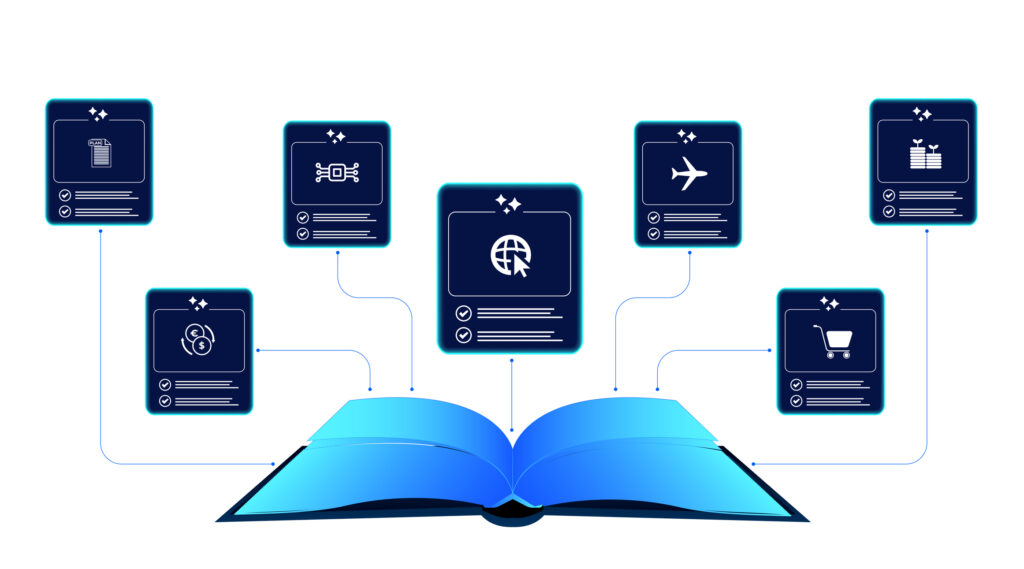
Connect knowledge pools of documents, conversations, media, data, and expertise with your Persistent Semantic Memory™ to ground your AI. Use our turn-key of connectors or build your own to connect to any enterprise systems.

Sign up for Innovation
The pace of innovation with AI is accelerating. Join an alpha group for early access to new turnkey Intelligence Modules, and help shape what comes next.