
What is Elasticsearch? The Enterprise Search Platform Explained

The Bloomfire Editorial Team delivers insights, best practices, and industry news for knowledge management professionals. With expertise in collaboration, knowledge sharing, and AI-driven technology, they provide valuable content to help organizations navigate today’s digital workplace.
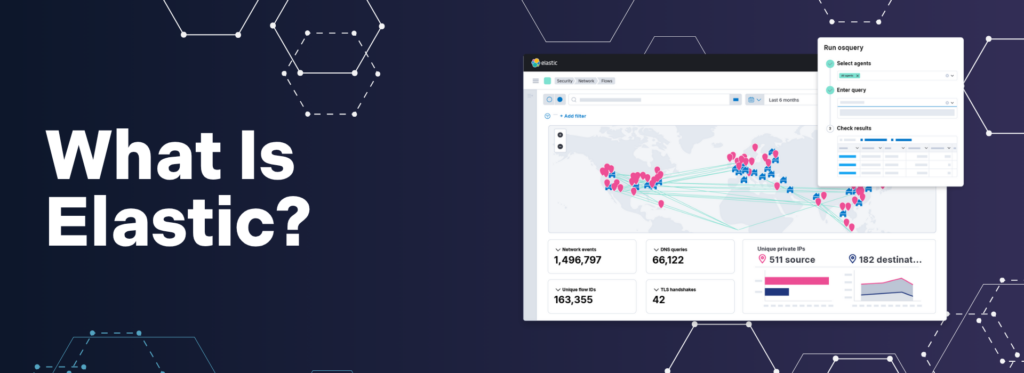
Elasticsearch is a distributed search and analytics engine built on Apache Lucene, first released in 2010 and now used by over 18,000 organizations worldwide. Many people first encounter it as part of the “ELK Stack”: Elasticsearch for search and storage, Logstash for data ingestion and transformation, and Kibana for visualization and dashboards. Together, they form one of the most widely adopted search and analytics platforms in enterprise technology.
At its core, Elasticsearch connects people to the right information at the right moment. Over time, it has grown into a platform that addresses three distinct use cases: enterprise search, observability (log analytics and monitoring), and security (threat detection and response). Read on to explore how Elasticsearch works, what it costs, and whether it’s the right foundation for your organization’s search and intelligence needs.
Pros and Cons of Elastic
Elasticsearch has earned its place as one of the most widely deployed search platforms for good reason. It delivers exceptional performance at scale, a flexible architecture, and a rapidly expanding set of artificial intelligence (AI) capabilities, making it a compelling choice for enterprise search, observability, and security use cases. Like any powerful platform, though, it comes with real trade-offs, particularly around operational complexity, technical expertise requirements, and total cost of ownership.
Pros
Elasticsearch’s strengths are most apparent at scale, where its distributed architecture, flexible data model, and broad ecosystem give technical teams a powerful foundation to build on.
- Speed and scalability at enterprise scale. Elasticsearch is widely praised for near-real-time search across massive datasets. Users consistently highlight that it handles millions or even billions of records with fast indexing and query performance.
- Flexible, schema-free data model. It accepts JSON documents and tries to detect data structure automatically, making it adaptable to a wide range of data types like structured, unstructured, and vector data, all in one store.
- Powerful search capabilities. It supports full-text search, fuzzy search, geo-based queries, vector search, hybrid (keyword + semantic) search, and complex aggregations. The Query DSL, a JSON-based query domain-specific language used by Elasticsearch, is highly expressive for building sophisticated queries.
- Strong AI and ML integrations. Elasticsearch has invested heavily in AI with vector search, semantic search, native inference services, and RAG (Retrieval-Augmented Generation) support for generative AI applications.
- Architecture scalability. Elasticsearch shines the brightest in architecture scalability, integration, and performance. Its distributed architecture and deployment flexibility across cloud, hybrid, and self-managed environments make this platform strong for enterprise-scale workloads.
- Strong data integration. An API-first ingestion model, Elasticsearch connectors, and streaming support enable broad integration across structured, unstructured, and real-time data sources. This makes it easy to bring data in from virtually anywhere.
- Open source roots with flexible deployment. The core is open source (NU Affero General Public License [AGPL]- licensed) and can be deployed on-premises, on any major cloud, or via the managed Elastic Cloud Search service.
- Broad ecosystem. Part of the wider Elastic Stack with Kibana, Logstash, and Beats. Extensive API client support across Python, Java, JavaScript, Go, C#, and more.
For organizations with the right technical foundation, these strengths make Elasticsearch a differentiated platform: one that can consolidate search, analytics, and security into a single infrastructure layer.
Cons
Elasticsearch’s limitations tend to emerge not in what the platform can do, but in what it takes to make it do it well. The operational demands, expertise requirements, and cost complexity are real considerations that organizations should weigh carefully before committing.
- Steep learning curve. While the platform heavily improves search, the learning curve to get there can be quite a hurdle. Understanding shard configuration, index mapping, cluster sizing, and query DSL all require specialized expertise.
- Operational complexity. Managing a production Elasticsearch cluster requires dedicated expertise. Administrators must handle capacity planning, performance tuning, index lifecycle policies, and issues like split-brain scenarios. Users note that money saved on licensing can quickly be spent on specialized labor to keep it running.
- High resource demands. Elasticsearch is memory-intensive. It requires substantial RAM for efficient operation, which can drive up infrastructure costs, especially for smaller organizations.
- Governance limitations. Full enterprise intelligence governance around AI explainability and U.S. National Institute of Standards and Technology (NIST) Artificial Intelligence Risk Management Framework (AI RMF) alignment requires additional layers beyond what Elasticsearch provides natively.
- Minimal tacit knowledge capabilities. Elasticsearch can index content that already exists, but it has no native capability to capture, curate, or govern the tacit knowledge, or human expertise and institutional knowledge, that lives outside of formal documents.
- Version upgrade pain. Multiple users point out that major version upgrades involve breaking changes, require index updates, and entail significant infrastructure effort.
- Not business-user-friendly. Business user accessibility is limited, as the platform typically requires technical support for management and configuration. Non-technical users can’t self-serve.
- Cost can surprise at scale. While the open-source core is free, real production deployments carry high costs. Hidden drivers, such as inter-node data transfer and snapshot storage, can add substantially to your baseline bill.
For many organizations, these trade-offs are manageable, but they underscore why Elasticsearch is best suited for teams with the technical depth to support it, rather than those looking for an out-of-the-box solution. With those trade-offs in mind, here’s a closer look at what the platform actually does.
See How Enterprise Search Stacks Up
Explore our independent evaluation of the top enterprise search platforms of 2026.
Download for FREE
Key Features of Elastic
Elasticsearch is more than a search engine; it’s a full platform for search, observability, and security. Here are the core features that define what it can do.
- Full-text and hybrid search. Elasticsearch combines keyword-based (BM25) and semantic (vector) search in a single query, delivering highly relevant results across both structured and unstructured content. It supports fuzzy matching, synonyms, autocomplete, and geospatial queries out of the box.
- Vector search and RAG support. Elasticsearch is one of the world’s most widely used vector databases. It natively stores and searches dense and sparse vectors, making it a strong infrastructure layer for generative AI applications and RAG pipelines that require fast, accurate semantic retrieval.
- The Elastic Stack (Kibana, Logstash, Beats). Elasticsearch is the search and storage core of a broader stack. Kibana provides dashboards, data exploration, and visualization; Logstash handles data ingestion and transformation; and Beats are lightweight data shippers for logs, metrics, and network data.
- Elasticsearch Query Language (ES|QL). Elasticsearch’s unified query language covers full-text search, log analytics, cross-cluster joins, and aggregations all in one place. This means teams no longer need separate query tools for different use cases, simplifying the operational knowledge required.
- Elastic Inference Service. A native inference layer that enables embedding models, reranking, and LLM integrations without needing external API keys or separate ML infrastructure. This makes it significantly easier to build AI-powered search applications directly on top of Elasticsearch.
- Observability. Elasticsearch powers log analytics, application performance monitoring (APM), infrastructure metrics, and OpenTelemetry (OTel) ingestion all from a single platform. Teams can monitor, detect anomalies, and respond to issues across their full stack.
- Security. Threat detection, investigation, and automated response capabilities are built directly into the platform, including AI-driven detection rules and scripted playbooks designed to accelerate incident response.
- Agent Builder. A tool for building, testing, and deploying AI-powered search agents using your own data, models, and tools. Agents can query Elasticsearch indices, call inference endpoints, and chain results into multi-step reasoning flows, all managed within the platform.
- Flexible deployment. Elasticsearch is available as open-source (self-managed), Elastic Cloud (fully managed), Elastic Cloud Serverless (consumption-based with no cluster management required), or through AWS, Azure, and Google Cloud marketplaces.
- Data tiering. Hot, warm, cold, and frozen storage tiers allow organizations to manage costs by matching data access frequency to the right storage layer, keeping frequently queried data fast and archival data affordable.
These features make Elasticsearch a versatile platform for teams building at scale, though realizing their full value typically requires experienced engineers who can configure, maintain, and optimize the system over time. When that foundation is in place, employees across the organization benefit from faster, more relevant search experiences, whether monitoring system health or surfacing insights from large volumes of data.
Elastic Pricing Plans: What You Need to Know
There are two different deployment options with different billing models. The self-managed Elastic Stack uses open-source core software that is free to download and run. Paid subscriptions unlock enterprise features, security capabilities, machine learning, and support. For self-managed deployments, Elastic currently offers Platinum and Enterprise tiers.
Elastic Cloud is fully managed and priced on compute capacity (RAM/storage), data transfer, and snapshot storage. The four subscription tiers are available:
- Standard: Basic security, alerting, and monitoring. Best suited for development or small-scale production workloads.
- Gold: Adds machine learning, advanced security features, centralized management, and 24/7 support with a 1-hour P1 response time. Available on Elastic Cloud only.
- Platinum: Advanced ML capabilities, cross-cluster replication for disaster recovery, enhanced SLAs, and a 99.95% monthly uptime guarantee.
- Enterprise: The broadest feature set, including a dedicated Technical Account Manager, searchable snapshots, and frozen storage — designed for large-scale enterprise deployments.
A Serverless option is also available on AWS, Azure, and Google Cloud. Rather than provisioning a fixed cluster, you pay only for the compute (measured in Virtual Compute Units) consumed by indexing and search, plus storage. This works well for variable or unpredictable workloads where running a 24/7 cluster would be wasteful.
Elastic’s pricing is resource-based, not per-seat, which makes costs difficult to estimate without knowing your data volume, retention needs, and usage patterns. Starting prices represent the smallest possible deployments.
In practice, modest production clusters on Standard or Gold typically run $1,500–$8,000 per month, while mid-sized clusters on Platinum or Enterprise typically run $10,000–$50,000 per month. Large-scale logging and observability deployments can exceed $100,000 per month. It’s also worth accounting for hidden cost drivers, which can add significantly to baseline costs at scale. For organizations considering an annual commitment, Elastic offers prepaid annual subscriptions (priced in Elastic Consumption Units) that typically yield 10–25% savings compared to month-to-month pricing.
Reviews of Elastic: What are Users Saying?
Elasticsearch earns consistently strong ratings across major review platforms like G2 and Capterra. The praise tends to focus on the same themes: speed, scale, and flexibility. For teams with the technical resources to deploy and manage it, Elasticsearch delivers on its promises. The criticism is equally consistent, centering on complexity, cost, and the expertise required to keep it running well.
Users who get the most value from Elasticsearch tend to highlight:
- Search speed and accuracy at scale. Reviewers routinely describe results as “blazing fast” even across massive datasets, with one G2 reviewer noting that “no matter if I’m searching through logs, text, or analytics data, it delivers results incredibly quickly once it’s properly configured.”
- Flexibility across use cases. From log management to e-commerce search to real-time analytics, users appreciate that Elasticsearch handles diverse workloads without requiring separate tools.
- Scalability that grows with you. The ability to add nodes and scale horizontally is consistently cited as a differentiator, with reviewers noting that the platform handles growth smoothly when sized correctly.
Where users push back:
- The learning curve is real. Setting up mappings, indexing strategies, and tuning the Query DSL is not intuitive, especially for smaller teams. Multiple reviewers describe it as requiring more expertise than expected to reach a stable, well-performing setup.
- Cluster management is an ongoing commitment. Users note that the initial deployment is only part of the challenge. Keeping a production cluster healthy, handling version upgrades, and tuning performance requires continuous attention and specialized knowledge.
- Cost at scale catches teams off guard. The open-source entry point can create a misleading cost picture. As usage grows, infrastructure demands, support tiers, and data transfer fees add up. One Capterra reviewer put it plainly: “The money saved on running Elasticsearch is easily spent two and threefold on specialized labor to keep it running.”
Elasticsearch is a high-performance platform that requires proper architecture planning, cluster management, and governance to ensure performance and cost efficiency at scale. For organizations with the right technical foundation, it’s a powerful and reliable choice. For those without it, the overhead can quickly outweigh the benefits. Fortunately, combining Elasticsearch with a platform like Bloomfire can mitigate these problems.
How does Bloomfire Complement Elastic?

Elasticsearch and Bloomfire are built for different and complementary jobs. Elasticsearch is purpose-built as a retrieval and infrastructure layer: fast, scalable, and powerful at indexing and surfacing data across large, distributed environments. Bloomfire is built as a knowledge intelligence layer: governed, human-centered, and designed to ensure the information employees and AI systems work from is trusted, current, and actionable.
When the two work together, they address the full Enterprise Intelligence stack, helping organizations succeed. Elasticsearch handles the access layer. Bloomfire handles the intelligence layer. Together, they close the gap between the two. Based on the 2026 Guide to Enterprise Intelligence Systems, here is what that combination unlocks:
- Search that surfaces answers, not just results. Elasticsearch retrieves content at scale across your data sources. Bloomfire’s Ask AI (Synapse) sits atop that foundation and delivers cited, sourced answers drawn from certified company knowledge. That way, employees don’t just get a list of documents; they get a direct, trustworthy response they can act on.
- A knowledge base that stays accurate over time. Elasticsearch indexes what exists, but does not monitor whether it remains accurate or relevant. Bloomfire’s self-healing knowledge base continuously flags outdated, duplicate, and conflicting content before it reaches employees or AI systems, keeping the foundation that Elasticsearch retrieves from clean and reliable.
- Organizational expertise made searchable. Elasticsearch is excellent at indexing formal content. Bloomfire captures the tacit knowledge that never makes it into a structured document, converting it into verified, indexed assets that Elasticsearch can then surface alongside everything else.
- Retrieval infrastructure that powers trustworthy AI. Most enterprise AI search runs on RAG architecture, meaning outputs are only as reliable as the knowledge retrieved. When Bloomfire governs the knowledge layer, and Elasticsearch handles the retrieval, AI systems draw from a foundation that has been curated, approved, and continuously maintained, producing responses organizations can actually trust.
- Broader access across the organization. Elasticsearch is primarily a developer and technical tool. Bloomfire extends the value of that infrastructure to every employee, with natural-language search and an intuitive interface that requires no technical expertise. The power of the retrieval engine becomes accessible to the whole organization, not just those who can configure it.
Together, Elasticsearch and Bloomfire address the full enterprise intelligence stack. Elasticsearch brings the search infrastructure and data integration horsepower. Bloomfire brings a governed, human-centered knowledge foundation that makes search results trustworthy and AI outputs reliable. For organizations that have already invested in Elasticsearch, Bloomfire makes it even more valuable.
Is Elastic Right For Your Organization?
Elasticsearch is a strong fit for large organizations with significant data volumes, dedicated technical resources, and use cases that span search, observability, and security. If your team is building AI-powered applications that require RAG pipelines, vector search, or semantic retrieval at scale, Elasticsearch provides the infrastructure to do that reliably. Where Elasticsearch reaches its limits is in the governance, knowledge quality, and human accessibility layers that enterprise intelligence also demands.
Organizations that want employees to self-serve with trusted answers, capture institutional expertise, or ensure the knowledge feeding their AI is accurate and up to date will find that Elasticsearch works best when paired with a dedicated knowledge management platform like Bloomfire. Together, they form the complete foundation with retrieval infrastructure and governed knowledge that ultimately turns search into a genuine strategic advantage.
Bloomfire + Elastic: Better Together
Pair your search infrastructure with a knowledge layer your AI can actually trust.
Talk to an Expert!
The Bloomfire Editorial Team delivers insights, best practices, and industry news for knowledge management professionals. With expertise in collaboration, knowledge sharing, and AI-driven technology, they provide valuable content to help organizations navigate today’s digital workplace.
How Self-Healing Knowledge Bases Work: A Closer Look Into Bloomfire’s Content Reliability

How Conflicting Content Detection Protects Answer Accuracy

Salesforce Einstein + Bloomfire: Smarter Answers Inside the CRM

Build your knowledge ecosystem
Connect knowledge pools of documents, conversations, media, data, and expertise with your Persistent Semantic Memory™ to ground your AI. Use our turn-key of connectors or build your own to connect to any enterprise systems.

Sign up for Innovation
The pace of innovation with AI is accelerating. Join an alpha group for early access to new turnkey Intelligence Modules, and help shape what comes next.