
Why Employee Engagement Matters to Customer Service

Betsy leads the customer success and implementation teams at Bloomfire and is a Certified Knowledge Manager (CKM) from KM Institute. Passionate about the people side of knowledge engagement and knowledge sharing, she brings real-world experience in tackling the challenges companies face with knowledge management.

Employee engagement is the hidden driver behind exceptional customer service, as employees naturally bring more effort, empathy, and ownership to every interaction when they feel connected to their work.
Customers can feel when a service rep is just going through the motions—and they remember it. When employees are disengaged, even good products and processes struggle to overcome inconsistent experiences and frustrated customers.
Improving employee engagement doesn’t just solve problems; it results in the kind of experiences that keep customers coming back and advocating for your brand. Read on to discover how and why investing in employee engagement initiatives transforms your customer service results.
What Does Employee Engagement Mean?
Employee engagement is the level of mental and emotional commitment employees feel toward their work, their team, and their organization. It reflects how enthusiastic and involved they are in their roles, beyond simply doing the minimum required. Engaged employees feel connected to the organization’s goals and see their own work as meaningful and worthwhile.
In the workplace, employee engagement initiatives show up as employees becoming motivated to put in extra effort, proactively solve problems, and support their colleagues. This commitment often leads to higher performance, better customer experiences, and stronger retention because employees want to stay and contribute to the company. Organizations typically measure engagement to understand the quality of this relationship and to identify how well their culture supports people’s motivation and enthusiasm at work.
How Do Employee Engagement Initiatives Improve Customer Service Outcomes?
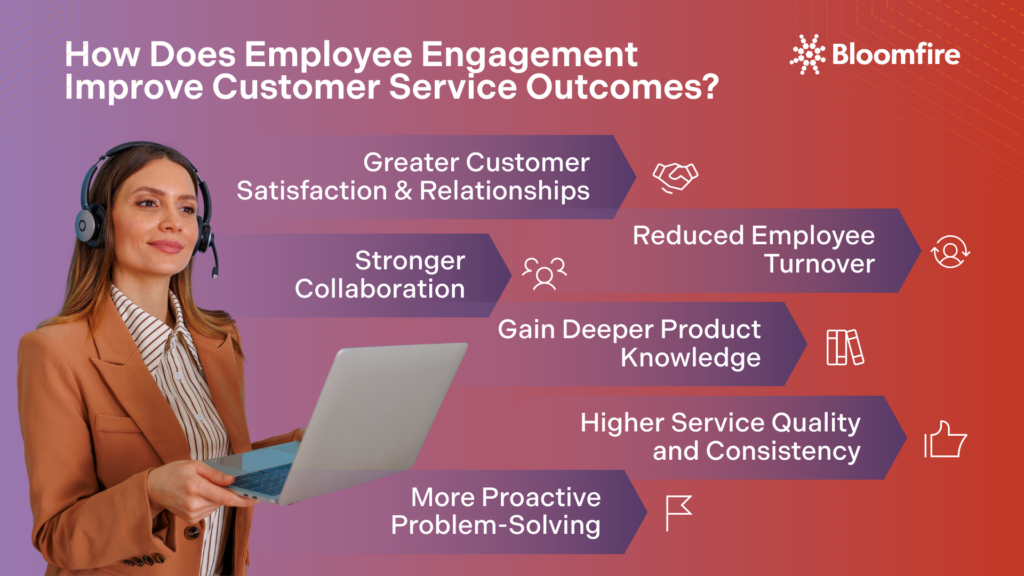
Employee engagement initiatives improve customer service outcomes by creating a workforce that genuinely cares about the customer experience. When employees feel valued, supported, and connected to the organization’s mission, they are more likely to go beyond basic job requirements. This discretionary effort is reflected in how they listen to, respond to, and anticipate customer needs.
1. Greater Customer Satisfaction & Relationships
Companies succeed with engaged employees who are more attentive and empathetic, so they can understand and address customer needs more effectively. Research from 2025 shows that engaged employees who deliver reliable and empathetic service significantly increase customer satisfaction and loyalty.
These employees build trust through consistent follow-through, clear communication, and genuine concern. Over time, the built trust strengthens long-term customer relationships and increases loyalty and repeat business.
2. Reduced Employee Turnover
When employees feel engaged, employee retention increases, reducing the need for constant hiring and training cycles. A study from 2024 shows that effective management practices increase employee engagement and decrease turnover intentions. Plus, engaged employees show higher commitment and intention to stay.
A stable, experienced team delivers more reliable service because they know the customers, systems, and standards well. Customers notice and appreciate this continuity, which builds confidence in the brand.
3. Stronger Collaboration
Improving employee engagement results in employees feeling more confident to share knowledge, coordinate across departments, and support one another to solve customer issues. This collaboration reduces handoff errors and delays that frustrate customers. As teams work together more effectively, customers experience smoother, faster, and more complete resolutions.
4. Gain Deeper Product Knowledge
Employees who are invested in their work naturally seek to understand products and services more deeply. Engaged employees naturally trigger curiosity, intrinsic motivation, and a desire for mastery, which in turn drive employees and customers to learn more about the products and services the company works with.
This deeper knowledge allows them to answer more questions accurately, recommend better solutions, and quickly troubleshoot issues. Customers benefit from more informed guidance and feel they are dealing with true experts.
5. More Proactive Problem-Solving
Engaged employees do not wait for issues to escalate; they identify patterns and intervene early to prevent customer problems. They take ownership of the customer experience and follow through until the issue is resolved.
Recent research finds that higher employee work engagement significantly boosts proactive customer-service performance, where employees anticipate problems and act early to resolve them. This proactive mindset reduces repeat contacts, escalations, and complaints.
6. Higher Service Quality and Consistency
Because engaged employees care about their performance, they adhere more closely to service standards and best practices. They consistently deliver courteous, timely, and reliable service, even during busy or stressful periods. This reliability builds a predictable, high-quality customer experience that strengthens brand reputation.
6 Ways to Boost Employee Engagement Among Customer Service Reps
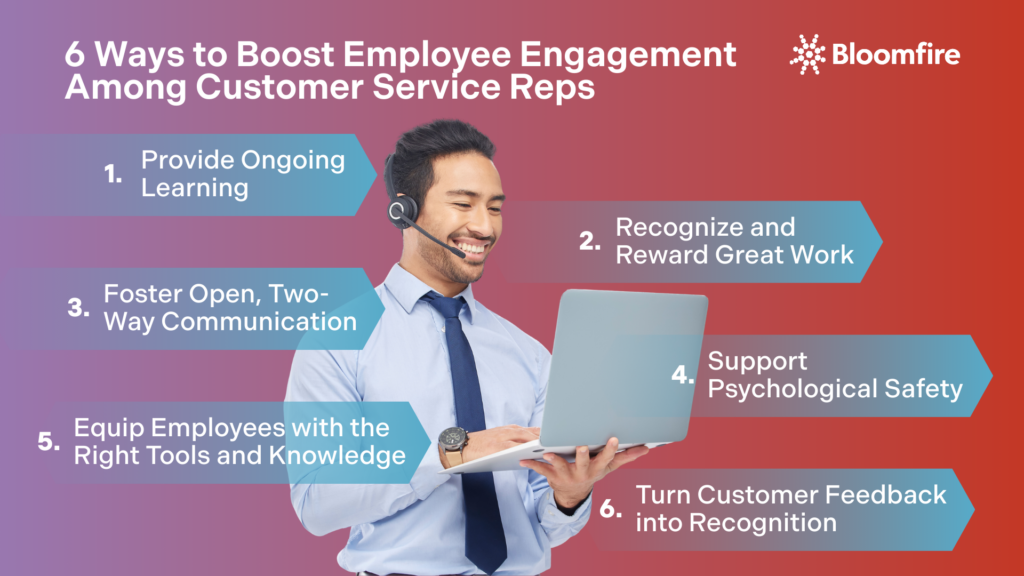
A critical driver of customer satisfaction, loyalty, and brand reputation is the engagement of customer service reps. When reps feel supported, valued, and equipped for success, they bring more energy and care to every interaction. Investing in engagement is not just an HR initiative; it is a strategic business decision that directly influences revenue and retention. The following six approaches help create an environment where reps feel motivated, empowered, and proud of their work.
1. Provide Ongoing Learning
Opportunities for ongoing learning keep customer service reps mentally challenged and growing in their roles. Regular training, micro-learning modules, and cross-skilling opportunities signal that the organization is invested in its long-term development. This growth focus increases motivation, confidence, and pride in their work. As reps expand their skills, they feel more capable and engaged in every customer interaction.
Targeted employee engagement training also helps reps connect everyday tasks to the bigger purpose of serving customers well. When training includes real-world scenarios, coaching, and reflection, it turns skills development into a continuous habit rather than a one-time event.
2. Recognize and Reward Great Work
Recognition and rewards reinforce the behaviors and attitudes you want to see more of. When reps receive specific, timely praise for great service, they feel seen and valued rather than like anonymous call-handlers. Meaningful rewards can include public shout-outs, small bonuses, development opportunities, or schedule flexibility. Consistent recognition builds emotional commitment and encourages employees to keep delivering their best.
3. Foster Open, Two-Way Communication
Open, two-way communication ensures that reps feel heard, not just managed. Leaders should regularly ask for input on processes, policies, and customer pain points, and then act visibly on that feedback. Clear, honest updates about goals, changes, and performance build trust and reduce anxiety. Over time, this environment encourages employees to speak up with ideas and concerns, deepening their connection to the organization.
4. Support Psychological Safety
Psychological safety means employees feel safe making suggestions, admitting mistakes, and asking for help without fear of blame or ridicule. When a good employee experience shows they will be supported rather than punished for honest errors, they are more willing to take initiative and learn. Leaders can model this by owning their own mistakes and focusing on solutions, not blame. This supportive climate reduces stress and helps engagement steadily grow.
5. Equip Employees with the Right Tools and Knowledge
Reps cannot stay engaged if they are constantly fighting slow systems, unclear processes, or missing information. Providing intuitive software, clear workflows, and up-to-date knowledge bases allows them to serve customers effectively. A knowledge management platform like Bloomfire makes it easy for reps to quickly find accurate, consistent information, helping them feel supported and confident in every customer interaction.
6. Turn Customer Feedback into Recognition
Customer feedback is a powerful, authentic source of recognition when used well. Sharing positive reviews, call-out quotes, or satisfaction scores with reps shows them how their efforts directly impact real people. Leaders can highlight specific examples in team meetings or internal channels to celebrate individuals and teams. Turning customer praise into daily recognition reinforces purpose and strengthens emotional commitment to the work.
Invest in Employee Engagement for Customer Service Success
Employee engagement is not a nice-to-have add-on to improve customer service. It is the engine behind consistent, high-quality customer experiences. When employees feel supported, recognized, and equipped, they naturally bring more focus, care, and ownership to every interaction. That energy compounds over time into stronger relationships, higher satisfaction, and a reputation customers can trust.
The path forward is both practical and achievable: invest in learning, recognition, communication, psychological safety, and the right tools so your teams can do their best work. If you want better customer outcomes, start by designing a work environment where your people feel engaged, respected, and proud to serve.
This blog post was originally published in September 2021. It was updated and expanded most recently in February 2026 to reflect new information and best practices.
Boost Your CX with Engaged Employees
Learn how knowledge management fuels employee engagement and elevates customer service.
Get Our Value Report
Employee engagement initiatives directly lift customer satisfaction and loyalty metrics because engaged employees deliver faster, friendlier, and more accurate service. They are more likely to personalize interactions, follow through on issues, and create “wow” moments that customers remember. Organizations with higher engagement often see better customer ratings and loyalty scores, which correlate with increased sales and profitability.
Early warning signs that unengaged employees are hurting the customer experience include slower response times, more errors, and increased complaints or escalations. You may also see low morale, such as a lack of initiative, negative attitudes, and more “bare minimum” performance from frontline staff. Metrics like declining customer satisfaction scores, repeat contacts for the same issue, and lower first-contact resolution often start to dip before bigger retention problems appear.
Frontline managers play a pivotal role by translating company strategy into daily behaviors, expectations, and support for service teams. Their coaching, recognition, and communication habits are often the biggest determinants of whether reps feel valued, informed, and psychologically safe. When managers remove obstacles, listen to feedback, and model customer-centric behavior, engagement and service quality usually rise together.
Customer-facing results emerge gradually, often within 1 to 3 quarters, depending on the scale and focus of initiatives. Leading indicators such as employee survey scores, stronger retention, and higher knowledge-sharing participation usually improve before customer metrics shift. Over time, consistent engagement efforts translate into higher customer satisfaction, stronger loyalty, and better financial performance than less-engaged competitors.
Betsy leads the customer success and implementation teams at Bloomfire and is a Certified Knowledge Manager (CKM) from KM Institute. Passionate about the people side of knowledge engagement and knowledge sharing, she brings real-world experience in tackling the challenges companies face with knowledge management.

Why Are Your AI Agents Only as Good as Your Knowledge Base?
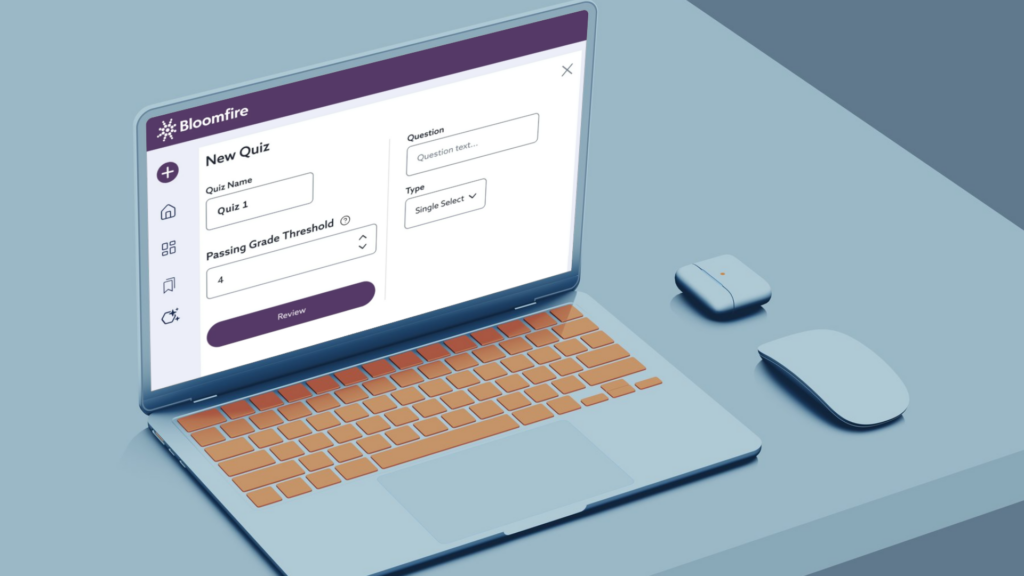
How Does Bloomfire Improve Knowledge Retention?
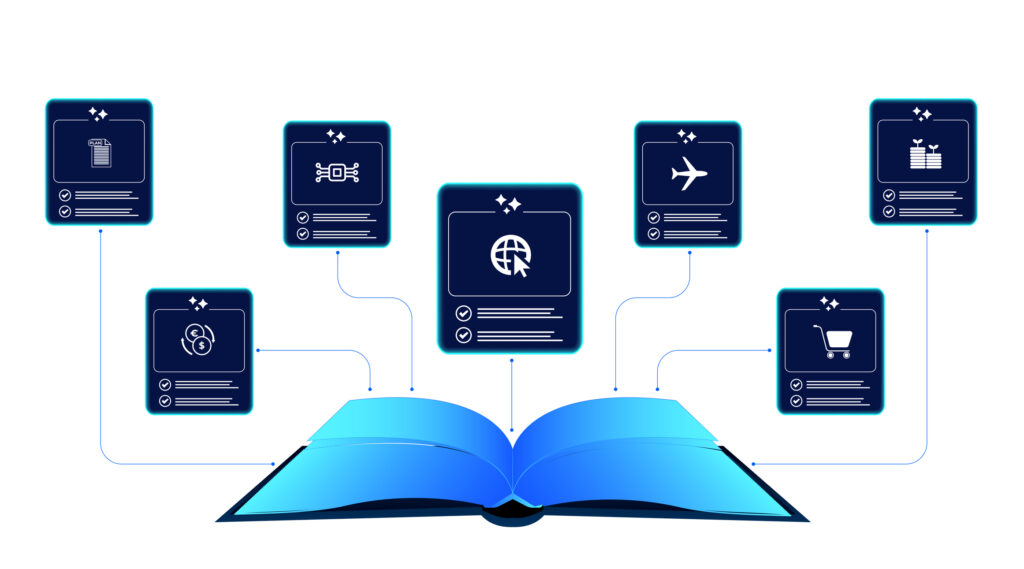
How Self-Healing Knowledge Bases Work: A Closer Look Into Bloomfire’s Content Reliability

Estimate the Value of Your Knowledge Assets
Use this calculator to see how enterprise intelligence can impact your bottom line. Choose areas of focus, and see tailored calculations that will give you a tangible ROI.

Take a self guided Tour
See Bloomfire in action across several potential configurations. Imagine the potential of your team when they stop searching and start finding critical knowledge.