
How Does a Conversational AI Assistant Work in a Knowledge Management System (KMS)?

Sanjay Jain leads a visionary team responsible for developing our platform and advancing capabilities for digital knowledge workers. With a relentless commitment to innovation, Sanjay and his team empower organizations to scan, search, select, synthesize, socialize, and signify their knowledge with the transformative power of AI.

A conversational AI assistant can solve a critical workplace challenge: employees spend 1.8 hours every day searching and gathering information. An artificial intelligence-powered knowledge management addresses this productivity drain by capturing and organizing information while delivering contextual answers with up-to-the-minute precision. These systems use machine learning to understand user queries, retrieve relevant knowledge, and generate accurate responses without manual intervention.
Discover how conversational AI platforms process natural language and integrate with enterprise knowledge bases. Learn their core architectural components, implementation methods, and practical considerations for deploying conversational AI solutions.
Expert Answers in a Heartbeat
Synapse synthesizes your entire library into one clear, actionable response.
Meet Synapse Today
4 Core Components of Conversational AI Assistant Architecture
Conversational AI platforms rely on four interconnected components that transform user input into meaningful responses. Each component handles a specific function within the larger system architecture.

1. Natural language processing (NLP) pipeline
The NLP pipeline begins by normalizing and tokenizing user input. Normalization converts text to a standardized format by lowercasing language inputs and removing irrelevant details. Tokenization then breaks the input into pieces called tokens while stripping away punctuation. Raw text gets prepared for deeper analysis at this preprocessing stage.
The system performs intent classification after normalization and tokenization to identify what the user wants to accomplish. An entity recognizer extracts specific information or data, such as order numbers, dates, or product names, from the query. This dual-layer analysis captures both the user’s goal and the critical details needed to fulfill that request.
2. Machine learning models for intent classification
Intent classification relies on transformer-based models such as BERT, RoBERTa, and DeBERTa, which understand word relationships in context. These models perform text classification by analyzing patterns in large datasets to infer user intent. Book me a flight to London triggers a book_flight intent rather than a general travel inquiry, for example.
The classification process uses trained machine-learning models to identify intent, even when users phrase requests differently. Bi-directional LSTMs with Conditional Random Fields treat entity extraction as a sequence-labeling task, extracting structured data from unstructured input. Context drift causes performance degradation in multi-turn conversations that mix topics. Strong intent detection becomes critical for user satisfaction.
3. Knowledge base integration layer
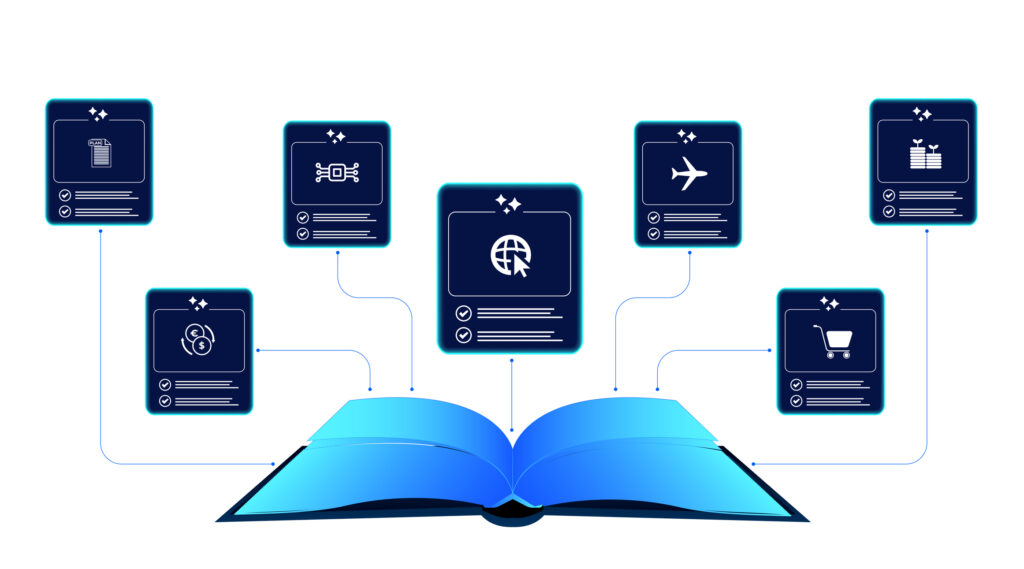
The Question Answerer component handles integration with enterprise knowledge bases and retrieves information to identify answer candidates that satisfy specific constraints. The system connects to multiple sources, including help center articles, internal wikis, documents, and past customer conversations. Retrieval-augmented generation (RAG) makes the AI first retrieve relevant documents from your knowledge base, then generate accurate answers based on verified information.
4. Response generation engine
Natural language generation converts the system’s internal decisions into coherent, human-readable responses. Template-based generation uses predefined structures with placeholders for dynamic information and offers control and consistency.
Generative models using large language models create diverse, contextually relevant responses but require careful instructions to prevent hallucinations. The generation stage selects the most appropriate response from multiple candidates before sending it to the user.
How Conversational AI Platforms Process User Queries
A user sends a query to a conversational AI platform. The system executes a coordinated sequence of operations that extract meaning, retrieve knowledge, and maintain conversational coherence.

1. Utterance analysis and text normalization
Utterances represent the exact words users say or type during their interactions with conversational AI solutions. The platform immediately normalizes this raw input by converting text to lowercase and removing punctuation, special characters, and HTML tags.
Tokenization breaks the normalized text into individual words or phrases that the system can analyze. Stop words like “the”, “is”, and “and” get removed since they carry minimal semantic value. Artificial intelligence chat word treatment handles abbreviations and informal language. It converts shorthand like ASAP into standard forms.
2. Intent recognition and slot extraction
Intent classification determines what users want to accomplish from their utterances. Modern conversational AI models achieve higher accuracy across multiple industries by analyzing user inputs using transformer-based architectures.
Entity extraction identifies specific details such as dates, locations, or product names, using Named Entity Recognition. Slot filling extracts these key parameters from utterances and provides the structured inputs required to execute actions.
3. Knowledge retrieval from multiple sources
Knowledge retrieval assistants use RAG to search company knowledge bases before they generate responses. The system queries multiple enterprise sources, including help center articles, internal wikis, past support tickets, and private documents. Retrieved documents provide exact information that prevents AI hallucinations. Vector databases store AI chat history as embeddings, enabling semantic search across previous interactions.
4. Multi-turn dialogue management
Multi-turn conversations require the conversational AI assistant to remember context and handle follow-up questions without losing track of previous inputs. Dialogue state tracking maintains a live record of the user’s intent, the information gathered, and what remains outstanding. The system tracks key data points through multiple turns and references them as needed throughout the conversation.
5. Context preservation through conversations
Context retention enables conversational AI software to recall information from previous interactions. Short-term memory stores recent AI chat turns in a sliding window. Long-term memory persists user-specific data in permanent databases across sessions.
Hybrid memory systems increase dialog coherence by 45% compared to short-term-only approaches. Vector stores retrieve past messages that are semantically relevant based on current queries and keep context windows lean while maintaining continuity.
What Are The Knowledge Management Conversational AI Integration Methods?
Integrating a conversational AI assistant with an existing knowledge management system requires establishing secure connections and implementing APIs. You also need to keep indexes current and capture emerging knowledge from ongoing interactions.

1. Connecting to enterprise knowledge bases
The best knowledge management AI platforms connect to company wikis, cloud documentation tools, internal sites, and help centers through one-click integrations. You can upload files in formats like PDF and PPT, or provide URLs for automated crawling.
Conversational AI solutions scan permitted pages. You can exclude sensitive content through include/exclude rules. The chatbot processes documents by breaking them into smaller chunks and converting them into embedded mathematical representations. These embeddings get stored in vector databases designed for similarity matching.
2. API-based system integrations
API integrations require REST-based web services with XML/JSON-compliant response formats. OAuth provides the recommended authentication method. Conversational AI platforms use secure APIs to connect multiple repositories, including PDFs, spreadsheets, CRMs, and intranet systems. This creates a unified knowledge graph. GraphQL offers efficient data fetching across multiple services. Webhooks enable real-time event notifications from backend systems to the conversational assistant.
3. Up-to-the-minute content indexing
Updates can be automatic through scheduled crawls or manual via triggered synchronization. Fast indexing scenarios support 10-second updates or instant processing, depending on requirements. Semantic indexing converts sentences and documents into high-dimensional embeddings. The system can understand synonyms, paraphrases, and context rather than relying on exact keyword matches.
4. Automated knowledge capture from support interactions
Various types of knowledge management systems scan and categorize data from emails, databases, and conversations. Automated metadata extraction tags content, making retrieval faster. The system identifies patterns in resolved tickets and support conversations. It then creates optimized knowledge base articles from those interactions without manual writing.
Implementation Considerations for Conversational AI Solutions
Deploying a conversational AI assistant requires careful planning for data preparation, model selection, infrastructure, monitoring, and failure handling. It takes a group of experts to set it up and keep it running, as it involves these critical considerations:
1. Training data requirements and preparation
Training data quality determines AI accuracy and effectiveness. Diverse datasets representing different accents, dialects, ethnicities, and demographics eliminate bias. They improve understanding across all user segments.
Conversational datasets must preserve context over turns, as context carryover affects model understanding. Data collection involves cleaning documents and splitting them into suitable chunks. You build labels for intents and entities, then scrub personally identifiable information.
2. Choosing between rule-based and AI models
Rule-based systems follow predefined if/then logic. They provide faster training, lower implementation costs, and consistent responses. AI models use natural language processing and machine learning to interpret intent. They handle varied phrasing and learn over time.
Rule-based approaches work well for narrow interaction spaces and high-risk scenarios, while NLU-plus flows extract intents using ML models that feed scripted dialogs. Machine learning requires large amounts of high-quality data but saves money in the long term through self-learning.
4. Deployment options: cloud vs on-premise
Cloud solutions provide scalability, lower upfront investment, and managed services. On-premises deployments provide data control and compliance with regulations such as HIPAA and GDPR. They also provide predictable capital expenditure costs. A Deloitte survey shows 55% of enterprises avoid AI use cases due to data security concerns. Hybrid models process sensitive data on-site while leveraging cloud resources for computational tasks.
5. Performance monitoring and optimization
Track goal completion rate, human takeover rate, fallback rate, and self-serve rate. Additionally, monitor intent accuracy, escalation reasons, and session length. AI-powered live monitoring relates intent coverage, escalation patterns, and satisfaction signals, then proposes fixes.
6. Handling edge cases and escalation protocols
Edge cases represent scenarios outside standard patterns. According to Gartner (as cited in Forbes), 85% of AI system failures stem from scenarios not represented well in training data. Escalation triggers include requests for human agents and bot failure after two to three consecutive misunderstandings. Sentiment analysis detecting frustration or anger also triggers escalation, as do keyword triggers like “refund,” “cancel,” or “legal.”
Effective handoffs transfer full conversation context, sentiment analysis, attempted resolution steps, and account information so customers never repeat themselves. Customers expect agents to know their issue history without having to ask again.
A KMS With Built-in Conversational AI Assistant
When a native conversational AI assistant is woven directly into the knowledge management platform’s architecture, the search process becomes effortless. It ensures the assistant has a deep, contextual understanding of the entire content library, enabling more nuanced and accurate responses. It also eliminates context-switching friction and ensures the AI’s learning model is aligned with the organization’s specific taxonomies and permissions.
Bloomfire exemplifies this evolution through its proprietary conversational AI assistant known as Synapse. It functions as a sophisticated layer that sits atop a company’s collective intelligence, providing a unified search experience that translates dense files into actionable insights while adhering strictly to the KMS’s existing security protocols.

Synapse is a comprehensive conversational suite designed to transform how employees interact with corporate data. It goes beyond basic keyword matching by using generative AI to summarize lengthy reports, draft new content from existing resources, and provide direct answers to natural-language questions. The tool acts as a tireless digital librarian that understands the intent behind a user’s search, pulling from videos, PDFs, and articles to create a cohesive explanation.
A built-in conversational AI assistant, like Synapse, is more efficient than attempting to bridge an external AI tool with a separate knowledge base. External integrations often suffer from data latency, security vulnerabilities during information transfer, and limited awareness of the specific metadata that native tools naturally possess.
Modern KMS Must Have Conversational AI
Conversational AI assistants change enterprise knowledge management by delivering instant, contextual answers through sophisticated NLP pipelines and machine learning architectures. Selecting a platform with a native conversational AI assistant ensures that every search query has a direct, secure link to the underlying data source, without the risk of integration lag. Investing in this built-in intelligence ensures your team spends less time hunting for documents and more time executing on high-value projects.
Just Ask Synapse
No complex queries required. Use natural language to find company insights fast.
See How It Works
The assistant acts as an intelligent interface that allows users to query the company’s entire knowledge base using natural, everyday language. It retrieves specific answers from deep within documents rather than simply providing a list of links or files.
Standard search returns a list of links that the user must manually sort through to find information. A conversational assistant provides a direct answer by summarizing the most relevant sections from multiple documents.
Reliable systems like Bloomfire’s Synapse include direct links to the source material for every answer generated. This transparency allows employees to verify the information and explore the original context whenever necessary.
The AI is grounded in the organization’s certified or approved content to prevent the hallucination of facts. Direct grounding ensures that the assistant only speaks from the specific knowledge base provided by the company.
Advanced systems identify discrepancies and may highlight the most recent or most authoritative source to resolve the conflict. They often cite their sources so the user can verify the information against the original documentation.
Sanjay Jain leads a visionary team responsible for developing our platform and advancing capabilities for digital knowledge workers. With a relentless commitment to innovation, Sanjay and his team empower organizations to scan, search, select, synthesize, socialize, and signify their knowledge with the transformative power of AI.
How Self-Healing Knowledge Bases Work: A Closer Look Into Bloomfire’s Content Reliability

How Conflicting Content Detection Protects Answer Accuracy
Salesforce Einstein + Bloomfire: Smarter Answers Inside the CRM

Build your knowledge ecosystem
Connect knowledge pools of documents, conversations, media, data, and expertise with your Persistent Semantic Memory™ to ground your AI. Use our turn-key of connectors or build your own to connect to any enterprise systems.

Sign up for Innovation
The pace of innovation with AI is accelerating. Join an alpha group for early access to new turnkey Intelligence Modules, and help shape what comes next.